
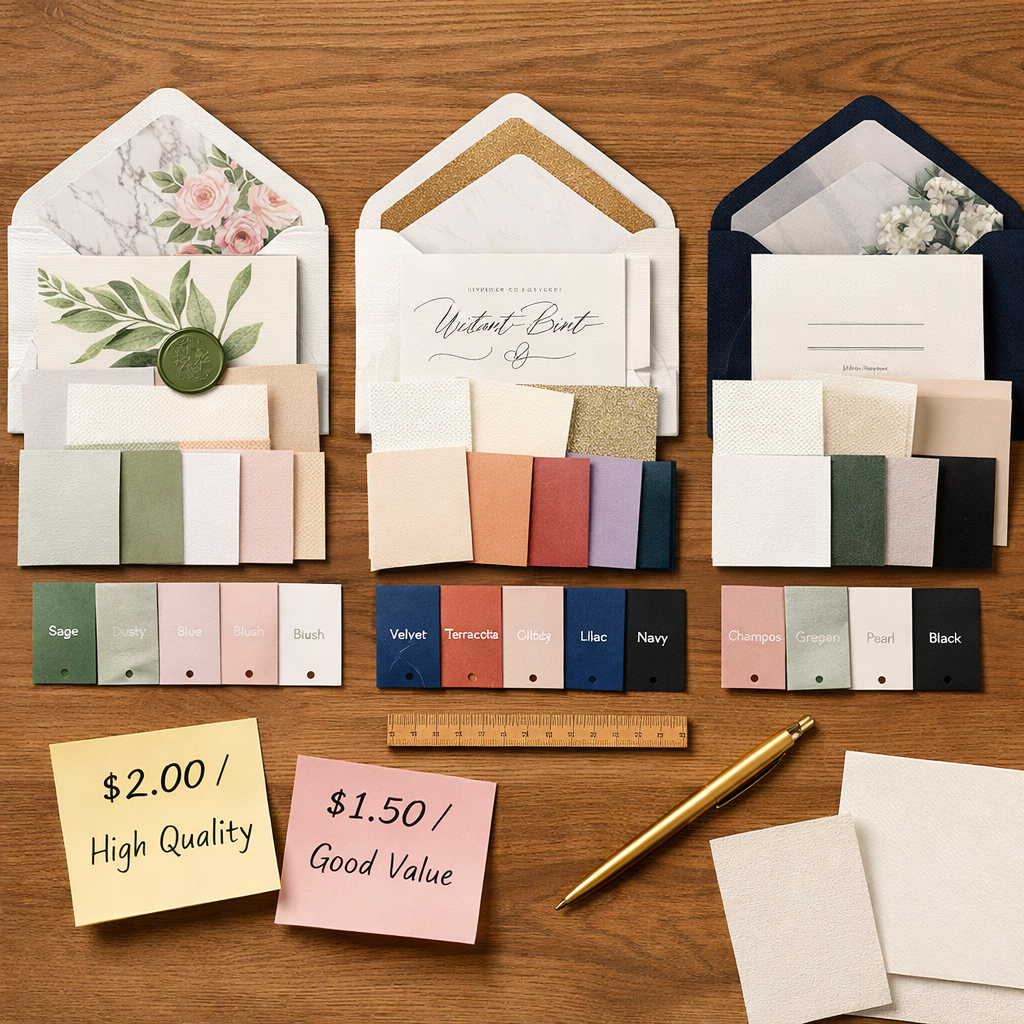
2026 Guide to Ordering Wedding Invitation Sample Kits for Easy Comparison
Choosing invitations gets a lot easier when you can hold them in your hands. If you want to order three different wedding invitation samples to compare, you’re on the right track. This guide shows you how to order wedding invitation sample kits for comparison, align your choices with budget and style, and evaluate paper, print methods, and color fidelity without guesswork. We’ll keep it simple: set priorities, shortlist three vendors, use one shared design file, and request comparable specs. Then unbox, compare in daylight, and pick with confidence. For more planning support, explore our wedding archives at A Day in Mollywood.
Why sample kits make comparison easier
Screens can’t convey weight, texture, or true metallic shine. Sample kits let you feel paper thickness, compare finishes like foil and letterpress, and check color accuracy in real light before you commit—often via free or low-cost kits with no obligation to buy. A sample kit is a curated envelope of paper swatches and printed invitation examples mailed by a vendor so you can compare paper weight, color fidelity, finishes, and envelopes in real light. Seeing wedding invitation samples side-by-side helps you compare invitation paper and invitation finishes quickly, avoid costly reprints, and make a decision you’ll love. At A Day in Mollywood, we always recommend sampling before you commit to protect your budget and vision.
Set your priorities before you shop
Before browsing, rank your top needs (1–5) across style match, price, sustainability, addressing/guest‑list tools, and preferred print methods. This quick worksheet narrows your choices to a calm, intentional shortlist. In 2026, leading platforms emphasize accessibility, multilingual templates, and eco‑friendly options—use these as filters when you search, as highlighted in industry insights on 2026 invitation tools from Alibaba (accessibility and sustainability features are increasingly standard). Eco‑minded couples can look for recycled stocks (e.g., 145 lb recycled) and tree‑planting programs noted by several marketplaces and vendors. This simple 1–5 ranking keeps decisions calm and on budget—a consistent theme in A Day in Mollywood planning guides.
Shortlist three vendors that fit your style and budget
Pick three vendors that collectively give you: your favorite design style, your best price, and your strongest operations (address printing, RSVP/guest list tools). Proof points help you prioritize:
- Zola’s guide to wedding invitation websites notes generous sampling—often five free customizable samples—and free recipient/return address printing on many orders.
- Vistaprint’s free wedding sample kit includes assorted papers and finishes with free shipping and no obligation to buy.
- Paperless Post’s roundup of the best wedding invitation websites highlights digital-first options with address collection and RSVP tracking to streamline your workflow.
A Day in Mollywood stays vendor‑neutral; use these proof points to compare clearly and pick what fits your priorities.
Prep one shared design file for apples-to-apples testing
Create one master text and color file—names, date/time, venue, and precise hex/CMYK values—and reuse it across all three vendors. That way, differences you see are vendor-driven, not content-driven. Canva’s free drag‑and‑drop editor supports collaborative design and AI-assisted content, and you can design using your own images at no cost. For pixel‑perfect control, see Design by Laney’s 2026 review of Adobe and Affinity layout programs.
Color fidelity is how closely the printed invitation matches the intended color shown on your screen. It’s shaped by CMYK or Pantone values, paper stock (coated vs. uncoated), inks, and finishing methods like foil or letterpress. Use consistent color codes across vendors and request proofs to reduce surprises. We use this one‑file approach at A Day in Mollywood to keep comparisons clean and feedback fast.
Order three sample kits with the same specs
To compare fairly, request identical specs from each vendor:
- Choose the same paper weight and finish across all three (aim for 140 lb or higher when possible for a premium feel).
- Match print method (digital vs. letterpress vs. foil) and envelope style, including liners.
- If offered, add a targeted single‑card sample of your exact design alongside the general free wedding sample kit.
Use this simple tracker as you order:
| Vendor | Paper (stock/gsm) | Finish | Print method | Envelope/liner | Address printing | Cost | Ship date |
|---|---|---|---|---|---|---|---|
Unbox and compare under consistent light
Open kits together and compare near a window at midday. Photograph samples with the same white‑balance setting so you can share accurate feedback with a partner or vendor. Check bilingual layouts or accessibility needs if relevant—2026 tools increasingly support accessible, multilingual templates. Mini checklist:
- Glare test under daylight and evening lamp light
- Smudge/rub test on text and foil areas
- Envelope fit and liner adhesion
- Address‑print alignment and legibility at small sizes
Evaluate print methods, paper, color, and envelopes
A few quick definitions:
- Letterpress uses a relief plate to press ink into thick paper, creating a tactile impression and shadowed depth.
- Foil transfers a metallic film with heat, producing reflective accents that pop on smoother stocks.
What to assess:
- Paper weight and finish (matte, uncoated, linen, recycled). Stocks around 140 lb+ feel sturdy and premium.
- Print method quality: impression depth, edge crispness, registration, and consistency.
- Color accuracy against your CMYK/Pantone reference.
- Envelope details: liner quality, flap style, and whether address printing is included to save time.
Confirm timelines, proofing, and total costs
Before you fall in love, verify logistics: production lead times, order minimums, and the proofing process. Many builders now offer AI‑assisted timelines and copy refinement to catch typos early. As a planning cue, aim to finalize invitations about 5–6 months ahead; order sample kits earlier so you have time for a second round if needed. Total your full cost: cards + envelopes + addressing, liners, upgraded paper/finishes, shipping, and any reprint policies or rush fees.
Decide and move to a final proof with confidence
Make a weighted decision: print fidelity (30%), paper feel (25%), price (20%), timeline (15%), sustainability/features (10%). Request a final digital or printed proof using your exact color codes before placing the full order to lock in color fidelity. If sustainability matters, note which vendor uses recycled stocks or plants a tree per order and use that as a tiebreaker. At A Day in Mollywood, this simple weighted score keeps choices objective and low‑stress.
Busy parent shortcuts to save time and stress
At A Day in Mollywood, we focus on shortcuts that fit real family schedules.
- Use platform address‑collection tools and free recipient/return address printing to skip handwriting.
- Co‑edit your design in Canva to split tasks with a partner or friend; its AI‑assisted content helps polish wording fast.
- The 30‑minute workflow: 10 minutes to shortlist three vendors, 10 minutes to duplicate your master text/color file into three templates, 10 minutes to place kit orders.
Common pitfalls to avoid
- Expect color to vary by printer and paper. Ask about color‑matching or upgraded proofs and review a digital mockup first.
- Order samples early enough to iterate once if needed, and confirm guest‑list integration to avoid manual addressing.
- Order 10–15 extra invites for flat‑lays, keepsakes, and late additions—a trend echoed by 2026 styling guides.
Sustainability and accessibility checks
Sustainability checklist:
- Recycled content percentage and paper weight disclosure
- Certifications (FSC, carbon initiatives)
- Tree‑planting or carbon‑offset programs
- Plastic‑free packaging and local printing options
Accessibility checklist:
- Font size and contrast appropriate for elders
- Readable, high‑contrast color pairs
- Bilingual/multilingual templates and clear hierarchy
- Screen‑reader‑friendly digital RSVPs for hybrid workflows
Accessible typography uses simple, readable fonts, sufficient size, and strong color contrast so information is clear for all guests, including those with low vision. Favor larger body text, generous line spacing, and predictable alignment. Test in print and on screens to ensure legibility across formats. At A Day in Mollywood, we prioritize readability over trend.
Frequently asked questions
When should I order wedding invitation samples in my timeline
At A Day in Mollywood, we recommend ordering sample kits 7–8 months before your wedding so you can finalize invites 5–6 months out with time for a second round if needed.
What should be included in a useful sample kit
At A Day in Mollywood, we suggest asking for a printed invitation on your target paper weight, a paper swatch set, foil or letterpress examples, envelope and liner options, and an addressing sample.
How do I compare paper weights and finishes without jargon
At A Day in Mollywood, we recommend weights around 140 lb or higher for a sturdy, premium feel. Compare finishes side‑by‑side: matte is velvety, linen has subtle texture, and shimmer reflects light.
How can I get accurate color matching from screen to print
At A Day in Mollywood, use consistent CMYK or Pantone codes in your files and request a proof. Review samples in daylight and photograph them with the same white balance to spot shifts early.
Do I need a second round of samples before placing the full order
At A Day in Mollywood, if color, paper, or finish isn’t perfect—or your details changed—order a second sample. A quick recheck protects your budget and timeline.