
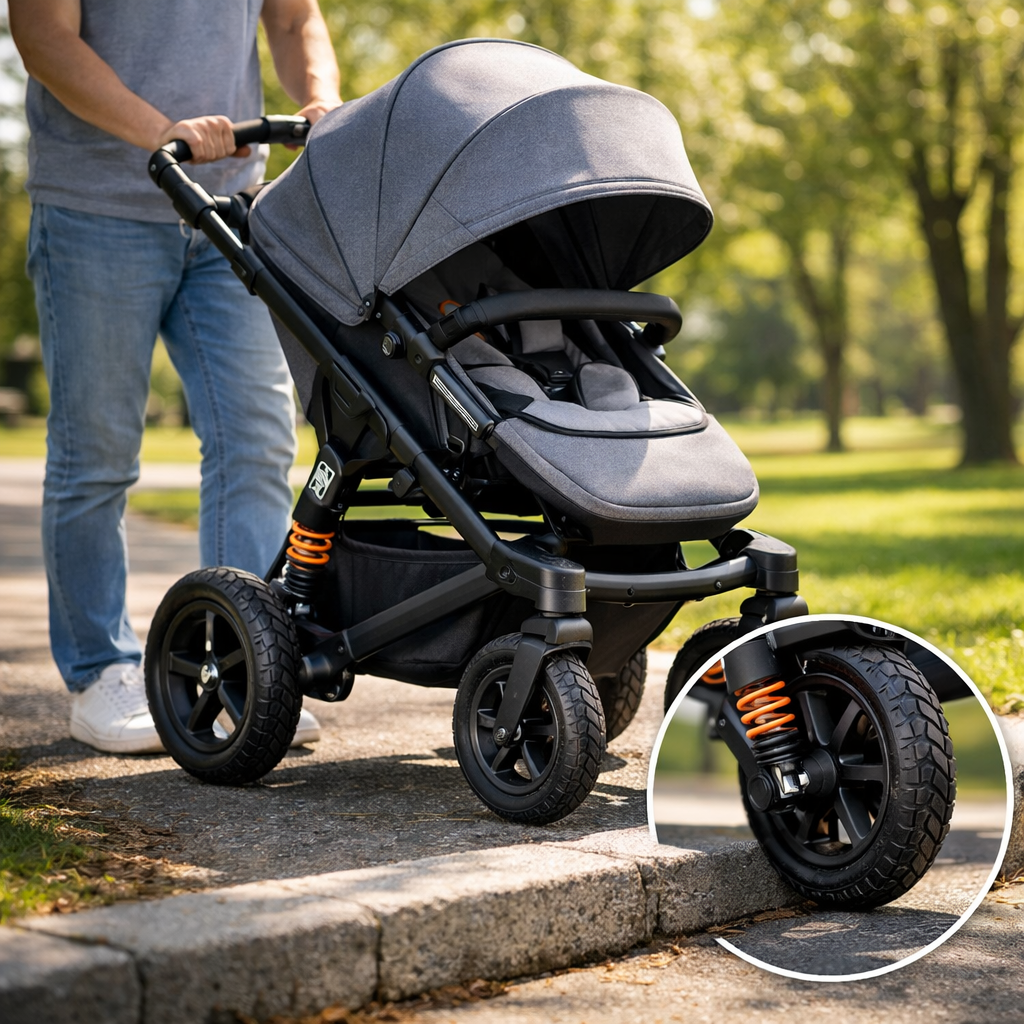
2026 Guide to the Best Suspension Strollers for New Parents
A smooth‑riding stroller can turn cracked sidewalks and curb cuts into nap time, not meltdown time. For most families: pick a full‑size everyday stroller with all‑wheel suspension for city life, a jogging stroller with large air or foam tires for runs and gravel, or a modular system if you’ll grow from one to two kids. Our top picks by use case this year: Thule Urban Glide 3 for jogging and trails; UPPAbaby Cruz V2 for everyday errands; UPPAbaby Vista V3 or Veer Switch&Roll for “grow with me;” and Momcozy ChangeGo for value. Below, A Day in Mollywood translates the suspension tech into plain English and helps you choose with confidence.
How to choose a suspension stroller with confidence
Start with an intent filter:
- Mostly city sidewalks, daycare runs, grocery trips: Look at full‑size everyday strollers with all‑wheel suspension and decent wheels. If you ride trains or have walk‑ups, consider a secondary compact or travel stroller for tight spaces.
- Mixed parks, grass, and light trails: Consider an all‑terrain stroller or a jogger you’ll also walk with—bigger wheels, better dampers, and a stable frame bring the smoothest ride.
- Running/jogging: Choose a dedicated jogging stroller with large air or foam tires, a reinforced frame, and a front‑wheel lock for speed stability.
Quick checklist to cut decision fatigue:
- Terrain match and “smooth ride” needs: wheel size + suspension quality drive shock absorption.
- Newborn readiness: bassinet or full, truly flat recline; or plan a compatible infant seat.
- Car‑seat compatibility: check adapters for your seat brand and whether you prefer installing the base with LATCH or a seat belt in your vehicle.
- Fold/vehicle fit: can you lift it one‑handed, and does it share trunk space with groceries?
- Long‑term value: expandable frames and strong brands resell better; great if you’re planning multiple children.
Independent testers consistently emphasize real‑world pushing, fold convenience, and newborn readiness when naming winners—priorities echoed in Reviewed’s long‑term stroller testing (200+ models, real‑life routes) Reviewed’s long‑term stroller testing and in our parent‑first evaluations.
Suspension types explained in plain language
“Stroller suspension is the system of springs, elastomers, or flex joints that absorbs bumps and vibrations from uneven ground. Paired with larger wheels or air/foam tires, it reduces jostling for baby and strain for the pusher, improving stability, steering, and overall ride comfort.”
Common setups you’ll see:
- Tunable suspension: Adjustable dampers you can dial for terrain or child weight. Parents like being able to “soften” for cobblestones and “firm up” for speed stability.
- FlexRide/Free‑Flex all‑wheel dampers: Everyday systems that smooth sidewalk cracks and playground paths without much fiddling.
- Jogger geometry: Large 16"–18" rear wheels, a robust frame, and a lockable front wheel keep the stroller tracking straight at speed with excellent shock absorption.
Callout: Best ride = larger wheels + tuned suspension. The tradeoff is usually added weight and footprint, while compact travel strollers save space but feel choppier on rough ground.
Testing criteria that matter in real life
What actually makes for an easier day? Parents who push strollers daily—and our team—focus on:
- Push effort and straight‑line tracking
- Curb pop and uneven‑surface control
- Nap‑friendliness: canopy coverage, recline quality, vibration damping
- Storage access and fold speed
- Trunk fit and carry weight
Consumer labs also score on safety, sturdiness, agility, and ease of use—pillars echoed in Consumer Reports’ stroller ratings.
Try before you buy:
- Load 5–10 lb in the basket (diaper bag) and test one‑handed steering.
- Pop up and down a curb; listen for rattles.
- Practice a fold/unfold while “protecting” a pretend sleeping baby.
- Check trunk fit, then add a week’s groceries to be sure it all coexists.
Best for jogging and all terrain
BOB Revolution Flex 3.0
A perennial pick for the best jogging stroller thanks to plush suspension, large wheels, and stability from sidewalk to gravel; the adjustable handle helps different pushers find their stride (source: Mommyhood101’s jogging stroller reviews).BOB Alterrain Pro
Built for trails and hills with premium suspension and a hand brake that adds confidence on descents. The weatherproofing and rugged tires suit year‑round outdoor families (source: Mommyhood101).Thule Urban Glide 3
A lightweight‑for‑a‑jogger 26‑lb build with a near‑flat recline, covered storage, and a quick one‑hand fold. Suspension on all three wheels keeps rides smooth; testers also note the curved handlebar aids control on runs (Wirecutter’s stroller guide).
Pros:
- Stable at speed, absorbent over gravel/grass
- Big canopies, practical storage; Thule’s covered basket holds up to 26 lb, plus a sandal‑friendly foot brake (per Wirecutter)
Cons:
- Bulkier than city strollers; tighter turns and hand‑brake styles vary by model
- Storage space at home and in small trunks can be a squeeze
Best full size everyday systems
UPPAbaby Cruz V2 — best for most families
Smooth everyday suspension, a reversible seat, ample basket, and city‑friendly footprint at $899.99. Great for sidewalk miles, daycare drop‑offs, and nap‑on‑the‑go without the heft of a grow‑to‑two frame (named a standout by Reviewed).Nuna MIXX Next — best for nap‑first routines
Flat recline that mimics a newborn bassinet, rear Free‑Flex suspension, MagneTech magnetic buckle, and GREENGUARD Gold fabrics keep daily rides calm and clean. Ideal for apartment living and frequent car‑seat transfers.
Many top full‑size picks now include reversible seats, UPF 50+ canopies, and one‑hand reclines/folds—small touches that reduce the mental load on busy mornings.
Best modular and grow with me options
UPPAbaby Vista V3
Enhanced FlexRide suspension and the ability to expand to two seats plus a ride‑along board (up to three kids). Bassinet sold separately (~$279.99). Smart for families planning siblings within a few years.Veer Switch&Roll (and Luxe)
Modular frame with tunable suspension; widely praised when paired with the Nuna PIPA RX for travel‑system performance. Flexible seating and outdoor‑ready wheels suit mixed‑terrain weekends.Cybex Gazelle S
Highly configurable with advanced suspension and sleek styling. Note: compatibility and some outdoor limitations vary by setup—double‑check your seat combos and intended terrain.
Tradeoff: More configurations usually mean more weight and footprint. Measure your elevator, trunk opening, and closet before committing.
Best value and budget friendly picks
- Momcozy ChangeGo
A feature‑packed system at $699.99 that converts to a double with 23 configurations, including a wagon mode. The compromise: heft—49.8 lb overall. Good for families prioritizing flexibility over light weight (Momcozy’s feature and price comparisons).
Value reality check:
- Budget/full‑feature hybrids often deliver more configurations for less but add weight and sacrifice refinement. Models like Mockingbird typically mimic luxury features at lower prices.
- Value tip: For the smoothest ride per dollar, prioritize wheel size and basic suspension over cosmetic add‑ons.
Side by side comparison at a glance
| Model | Suspension type | Wheel size/tires | Weight | Price | Newborn readiness | Fold size/notes | Car-seat compatibility |
|---|---|---|---|---|---|---|---|
| UPPAbaby Cruz V2 | All‑wheel springs/dampers | Mid‑size foam | — | $899.99 | With bassinet or infant seat; seat suitable when older | Compact fold; big basket | Adapters for major seats |
| UPPAbaby Vista V3 | FlexRide all‑wheel | Larger foam | 27.6 lb | $999.99 (bassinet extra) | Bassinet (sold separately) or infant seat | Larger fold; grows to 2–3 kids | Broad adapter ecosystem |
| Momcozy ChangeGo | All‑wheel suspension | Large foam | 49.8 lb | $699.99 | Multiple configs; seat/bassinet modes | Wagon mode; bulky | Brand adapters; check list |
| Thule Urban Glide 3 | Suspension on all 3 wheels | Large foam/air‑style | 26 lb | — | Infant seat with adapters; seat when older | One‑hand fold; covered basket up to 26 lb | Adapters available |
| BOB Revolution Flex 3.0 | Robust shocks | Large air | — | — | Infant seat with adapters; seat when older | Bulky fold; trail‑ready | Adapters available |
| BOB Alterrain Pro | Premium shocks; hand brake | Large air | — | — | Infant seat with adapters; seat when older | Rugged; weather‑ready | Adapters available |
| Veer Switch&Roll | Tunable suspension | All‑terrain foam | — | — | Infant seat with adapters; seat/bassinet options | Modular frame; larger fold | Strong compatibility with Nuna and more |
Note: Prices and weights vary by retailer and configuration; confirm current specs before purchasing.
Newborn readiness and car seat compatibility
“Newborn readiness means a stroller can safely carry a baby from birth using either a fully flat, supportive recline or a certified bassinet. Many parents also use an infant car seat with adapters for quick transfers, but flat recline or a bassinet better supports healthy spine and airway alignment.”
Examples:
- Nuna MIXX Next offers a flat recline that mimics a bassinet and pairs seamlessly with Nuna PIPA series infant seats.
- Veer Switch&Roll plus the Nuna PIPA RX earns praise as a smooth, secure travel system. The PIPA RX is lightweight with a steel‑reinforced base—helpful for frequent in‑and‑out days.
Before buying, confirm adapter availability, recline angle, and bassinet details (e.g., Vista V3 bassinet is sold separately). For car‑seat bases, follow your manual for proper LATCH or seat‑belt installation.
Small car and storage fit checks
Fit test:
- Measure trunk opening height/width and depth; compare with folded dimensions.
- Practice a one‑handed lift; can you load it without bumping the frame?
- Test alongside a weekly grocery haul or a weekender bag.
- At home, confirm closet depth and hallway turns; in buildings, verify elevator and doorway clearance.
Secondary stroller for tight spaces:
- A compact travel stroller can be a sanity saver. Many have 50‑lb limits; the Ergobaby Metro 3 offers a universal car‑seat adapter and newborn recline—useful as a backup for small trunks (Ergobaby Metro 3 overview video). For more options, see our travel stroller picks.
Mirror what pros check: setup ease, smoothness, and maneuverability—priorities highlighted in The Independent’s hands‑on stroller tests.
Maintenance, longevity, and resale value
- Quarterly care: clean debris, wipe and lube wheel bearings, check tire pressure (if pneumatic), and inspect suspension joints. Ride smoothness lives in wheel and damper health.
- Longevity and resale: Premium full‑size systems (UPPAbaby, Nuna, Cybex) commonly run $900–$1,300 with ~27–29 lb frames and 50‑lb seat limits. Strong brands often resell better—factor that into total cost of ownership.
- Listing prep: Photograph clean wheels and suspension, include accessories, and note original price/specs to earn buyer trust.
Mental load, comfort, and self care considerations
Choose features that lighten the daily load: a one‑handed fold, auto‑positioning buckles, and covered storage (Thule’s covered basket keeps essentials ready). Smoother suspension protects naps on cracked sidewalks and reduces arm fatigue—especially helpful for postpartum recovery and long city days. If you’re sharing caregiving, confirm handlebar height and push effort work for everyone. A stroller that makes daycare drop‑off, a loop around the block, and an impromptu coffee stop feel easy is an investment in your mental health. For more fit tips, see our guide to how to choose a reclining stroller for toddlers.
Safety notes for running and rough terrain
- Use a jogger with robust suspension, a lockable front wheel (if applicable), and appropriate brakes; the BOB Alterrain Pro’s hand brake adds control on descents.
- Follow manufacturer age guidance for jogging (often around 6+ months); lock the front wheel when running; secure the harness; avoid high speeds on uneven surfaces.
- Pre‑run check: tire pressure, brake test, canopy/strap adjustments, and balanced basket loading.
Buying checklist before you click purchase
- Terrain match (city, mixed, jogging) and suspension type fit your routes.
- Newborn readiness plan: bassinet vs. true flat recline; confirm infant seat + adapters.
- Folded footprint vs. trunk/closet; total system weight you can lift repeatedly.
- Value plan: resale potential; accessory costs (e.g., separate bassinets).
- Remember: real‑world push and fold convenience drive satisfaction—key criteria in both Reviewed and Consumer Reports evaluations.
Frequently asked questions
What does stroller suspension actually do for my baby and me?
Suspension absorbs bumps so your baby feels fewer jolts and you push with less strain. Paired with larger wheels, it improves stability, steering, and nap‑friendliness—the combo we prioritize in A Day in Mollywood guides.
Can a jogging stroller be my only stroller for city life?
Yes, if you can handle the size and weight. Joggers deliver the smoothest suspension and stability but can be bulky in tight stores or on transit; many parents add a compact travel stroller for small‑space days—an approach we recommend in our A Day in Mollywood guides.
Do I need a bassinet or is a full recline safe for newborns?
Either can be newborn‑ready. A fully flat, supportive recline or a certified bassinet supports healthy alignment; we suggest balancing infant car‑seat use with flat‑recline or bassinet time for longer strolls.
How much should new parents budget for a smooth riding stroller?
Expect mid‑to‑premium models with better suspension to run about $800–$1,300, while value picks sit lower with some tradeoffs. Include adapters, bassinets, and likely resale value in your total cost—we weigh the same factors in A Day in Mollywood picks.
Will a suspension stroller fit in a small trunk or apartment closet?
It depends on folded dimensions and weight. Measure your spaces and compare specs, then test a one‑handed lift and a trunk load alongside groceries to be sure it fits your real life—the fit check we always recommend at A Day in Mollywood.