
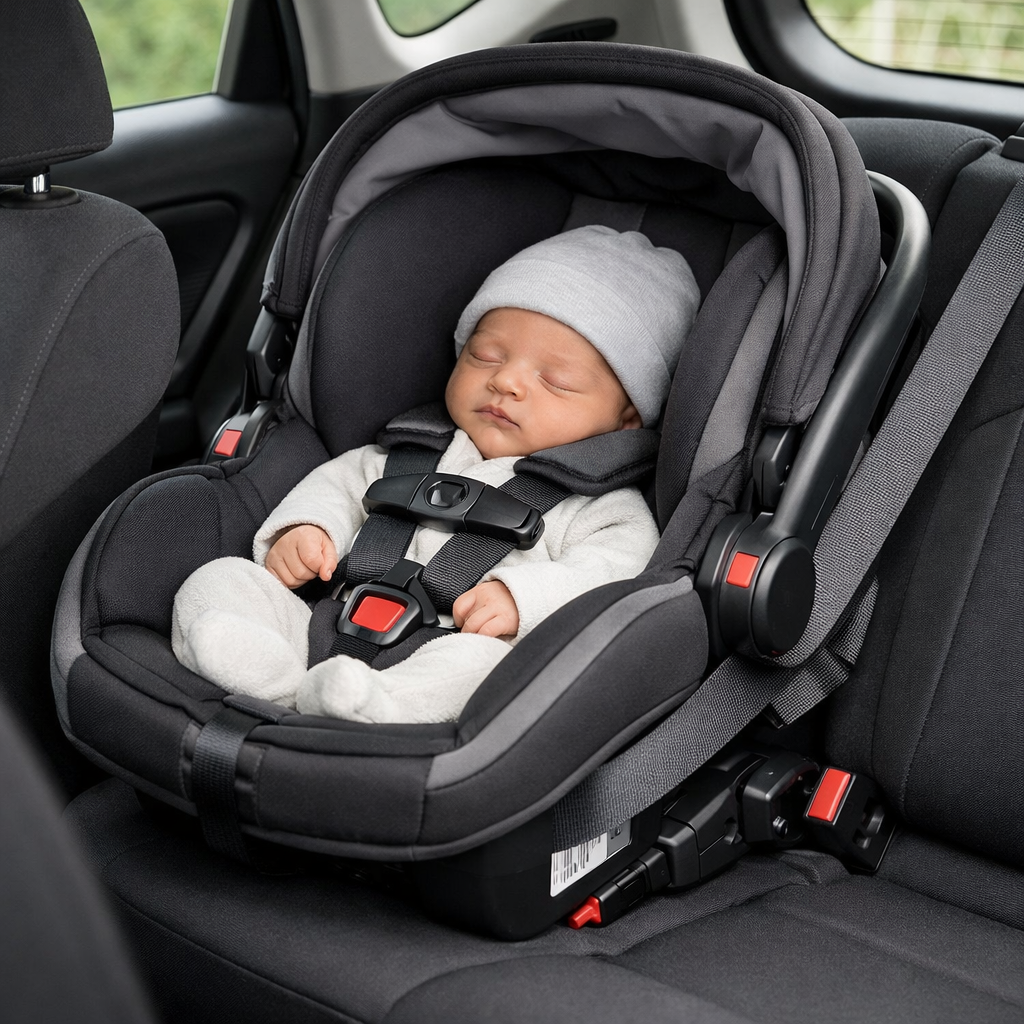
Best Infant Car Seats for Small Cars Without Compromising Newborn Safety
Small car, big safety goals? You don’t have to choose. The best infant car seats for small cars without compromising newborn safety are the ones that fit your vehicle, your baby, and your daily routine—and that you can install correctly every time. In this guide, we spotlight compact car seats with stability-boosting features (think load legs and anti-rebound devices), simple installs, and lighter carriers for tight parking and walk-up living. I’ve installed seats in a tiny hatchback and wrangled baseless installs in rideshares—so these picks balance real-world usability with evidence-based safety. Share your exact car model and seat wins in the comments so we can help other small-car families find a confident fit.
A Day in Mollywood
Parenting isn’t a perfection contest—especially in a compact car. We blend lived experience with expert guidance to help you secure a safe, repeatable install. I’ve had to fit an infant seat behind a tall driver and navigate airport curbside with a sleeping newborn; that’s why this list prioritizes small-car fit, clear indicators, and features that reduce user error. We keep guidance simple, repeatable, and judgment-free. Tell us what worked in your sedan, hatchback, or city car—we’re building a fit-first library of small car infant car seat solutions together.
How we chose compact, safe infant seats
We evaluated four things: crash protection, ease of use, vehicle fit, and real-world portability for compact cars. We prioritize small-car fit and repeatable installs over extras you won’t use. Consumer Reports tests all three (crash protection, ease of use, fit) and labels crash protection as Basic, Better, or Best—underscoring that the safest seat is one you can install correctly in your vehicle every time (see Consumer Reports’ infant seat ratings). We also leaned on lab-tested reviews and expert guides like Wirecutter’s testing and Car and Driver’s hands-on installs in smaller cabins.
A movement-limiting device is hardware on a car seat base—like a load leg or anti-rebound bar—designed to reduce rotation and rebound in a crash. By limiting forward and backward motion, these features help stabilize the seat and can improve crash performance in tight vehicle cabins (emphasized in Wirecutter’s testing).
Our shortlist prioritized:
- Compact width and short front-to-back footprints for behind-a-tall-driver installs
- Clear install indicators and belt lock-offs to curb misuse
- Stability features that matter in small spaces: load legs, rigid LATCH, and anti-rebound devices (highlighted by Wirecutter’s testing and The Car Seat Lady’s recommendations)
- Proven, repeatable installs across a range of vehicles (validated by Car and Driver’s expert testing)
Comparison at a glance:
| Seat | Weight (carrier) | Width/Footprint | Key Safety Features | Install Aids | Price Range (USD) | Best For |
|---|---|---|---|---|---|---|
| Clek Liing | ~9 lb | Narrow (≈17 in), compact base | Load leg; optional rigid LATCH base | Clear recline indicators; belt lock-offs | ~$430–$520 | Small sedans; behind tall driver; three-across |
| Chicco KeyFit 35 | ~10 lb | Compact base/front-to-back | Anti-rebound handle position (varies by model) | SuperCinch; ReclineSure leveling | ~$230–$350 (Max Zip ClearLux about $349) | First-time parents; easy, reliable installs |
| Graco SnugRide SnugFit/35 Lite LX | 7.6 lb (35 Lite LX) | Short front-to-back | Anti-rebound (SnugFit DLX base) | Bubble level; simple base; belt lock-off (varies) | ~$140–$300 | Budget; behind tall driver |
| Nuna PIPA Aire/Aire RX | ~7 lb | Compact base | Load leg; rigid LATCH (RX) | Visual indicators; easy click-in base | ~$550–$650 | Ultra-light carry; premium materials |
| Cybex Aton (family) | ~9 lb | Compact shell | Linear side-impact; load leg on some bases | Rigid LATCH on select bases | ~$250–$400 | City cars; side-impact focus |
| Cybex Cloud T | ~12 lb | Compact base | Load leg; linear side-impact | Rigid LATCH base; recline in stroller | ~$450–$650 | Premium stability; stroller transfers |
| Doona | ~16–17 lb | One-piece footprint | Integrated frame; EU belt path for baseless | Built-in wheels; quick fold | ~$500–$650 | Taxis/rideshare; minimal gear |
| UPPAbaby Aria | ~6 lb | Compact shell | Side-impact structure; infant inserts | Clear indicators; simple base | ~$300–$350 | Walk-ups; frequent carrying |
Notes: Weights and dimensions vary by trim; always confirm specs with the manufacturer.
What to measure before you buy
Use this quick, car-by-car checklist to avoid returns and guarantee a safe fit:
- Measure front seatback to rear seat bight depth (the seat crease). Note your driver’s height and how far back they sit.
- Measure rear seat width if you’re considering three-across or a narrow car seat.
- Note LATCH anchor locations and buckle stalk length/rigidity—these affect base stability and access.
- Confirm roof height and door opening angle for easy loading in tight parking spaces.
Then:
- Check the seat’s vehicle compatibility guide and prioritize shallower shells or narrower bases for compact vehicles (echoed by Car and Driver’s expert testing).
- Look for install features that reduce error in tight spaces: rigid LATCH, bold color indicators, and belt lock-offs (reinforced by Wirecutter’s testing).
Rigid LATCH, defined: a metal, click-in connector built into the base that attaches directly to your car’s lower anchors. It often creates a tighter, more consistent install with less effort than webbing-based LATCH—especially helpful in cramped rear seats.
For deeper fit tips and model lists that work in small cabins, see our small-car fit guide on A Day in Mollywood.
Clek Liing
Why it stands out: The Clek Liing is a reliable narrow car seat for small cars, offering a slim shell and excellent stability features that help it fit behind taller drivers and in some three-across layouts (noted in The Car Seat Lady’s recommended infant seats). The base with load leg adds meaningful crash stability, and certain versions include rigid LATCH for a rock-solid click.
Who benefits most: Small sedans, tall-driver households, and families planning future three-across.
- Pros
- Narrow shell that saves inches
- Movement-limiting load leg; premium base stability
- Clear indicators and lock-offs support repeatable installs
- Cons
- Higher price
- Heavier base than many budget options
Chicco KeyFit 35
The KeyFit 35 is a small car favorite for its easy, confidence-building installs. Chicco’s SuperCinch tightener and ReclineSure leveling system reduce guesswork, which helps in tight spaces (highlighted by Car and Driver’s expert testing). The KeyFit Max Zip ClearLux variant was named an overall best by The Bump and lists around $349. For materials, the ClearTex fabric option is Greenguard Gold–certified with no added flame retardants, a plus for material-conscious parents (see Forbes’ car seat picks).
Great for: First-time caregivers who want straightforward, consistent installs and broad stroller compatibility.
Graco SnugRide SnugFit 35
If you’re watching both space and budget, Graco’s SnugRide line delivers a compact fit with approachable price points. The 35 Lite LX is often recognized as a best budget pick around $139, while still keeping a shorter front-to-back footprint (cited by The Bump). BabyGearLab measured the 35 Lite LX carrier at about 7.6 lb with a crash-test score of 7.4—impressive for the price. Step up to SnugFit DLX for an anti-rebound base feature that boosts stability in tight cabins (noted in Wirecutter’s testing).
Best for: Value seekers needing space efficiency behind a tall driver.
Nuna PIPA Aire
The PIPA Aire/RX is ultra-light and travel-friendly, and pairs with a premium base featuring rigid LATCH and a load leg (RX). It’s easy to carry upstairs and across parking lots, and select models add Nuna’s Sky drape canopy for full-coverage naps. The trade-off is cost: the PIPA Aire RX is often listed near $650 (reported by The Bump).
Ideal for: Parents who prioritize featherweight carry and premium materials over lower price.
Cybex Aton
A compact option with advanced side-impact thinking, the Aton family suits city cars and tight street parking. Many Aton variants feature linear side-impact protection and some bases add a load leg; several also offer rigid LATCH for simplified installs in small spaces (summarized by BambiBaby’s infant seat tech overview and echoed in Wirecutter’s feature highlights). No-rethread harness options make newborn fit quicker in your backseat.
Best for: Small vehicles where side-impact mitigation and compact shells matter.
Cybex Cloud T
The Cloud T layers on premium safety and convenience: a load leg, linear side-impact protection, and a rigid LATCH base, plus a unique recline when clicked to compatible strollers for better on-the-go naps. Expect premium pricing—many top-tier infant seats fall in the $400–$650 range (noted by The Bump).
Best for: Small cars that benefit from movement-limiting tech and families who want seamless stroller transfers.
Doona
The Doona is a car seat and stroller in one, saving trunk space and simplifying curb-to-car transitions—especially for apartment living and rideshare. It’s heavier to lift than standard infant carriers, but its one-piece design is surprisingly compact for small cars. It’s also approved for airplane use; always confirm airline policies before you fly.
Best for: Urban families, taxis/rideshares, and minimal-gear households.
UPPAbaby Aria
Among the lightest infant seats, the Aria weighs about 6 lb—wonderful for stairs, walk-ups, and everyday carrying (reported by Forbes). It pairs straightforward installs with travel-ready design and family-friendly fabrics.
Best for: Parents who want an ultra-light carrier without sacrificing small-car fit.
How to match a seat to your small car and lifestyle
Start with fit, then your routine:
- Tight front-to-back space? Prioritize compact bases/shells like Chicco and Graco, or narrow designs like Clek (validated in Car and Driver’s compact-car testing).
- Frequent carrying or walk-ups? Go ultra-light: UPPAbaby Aria or Nuna PIPA Aire (Forbes and The Bump highlight weight advantages).
- Want extra stability? Choose a base with a load leg or anti-rebound bar (reinforced in Wirecutter’s testing).
- Budget under $200? Graco SnugRide 35 Lite LX is a strong value (The Bump’s budget callout).
Independent labs and expert outlets consistently agree: prioritize crash performance, correct installation, and clear indicators; premium features can add protection but may increase cost or weight (see Consumer Reports’ ratings and Wirecutter’s feature analysis). For a deeper dive on LATCH vs seat belt and when to use each in small spaces, see our quick-install guide.
Safety features that help in tight spaces
- Load leg: A support leg extending from the base to the vehicle floor that reduces forward rotation and energy transfer in a crash, improving stability—especially in compact cabins (highlighted by Wirecutter’s testing).
- Anti-rebound bar: A bar on the base that limits backward rebound after a crash, helping prevent the seat from rotating toward the seatback (noted in Wirecutter’s testing).
- Rigid LATCH: A metal, click-in connector built into the base that can deliver a tighter, more consistent install than webbing-based LATCH, reducing user error in small spaces (covered by Wirecutter).
Consumer Reports emphasizes that the safest seat is the one that fits your vehicle and is installed correctly—every ride.
When to switch from infant seat to convertible
Switch when your baby reaches the infant seat’s stated height or weight limit, or when their head approaches the top-of-shell limit—always check your manual. If your infant seat forces the front passenger dangerously close to the dashboard, or you can’t maintain a correct recline in your small car, it’s reasonable to move to a rear-facing convertible earlier. Car seats save hundreds of lives each year; focus on proper fit at each stage (reinforced in Forbes’ safety guidance).
Frequently asked questions
What makes an infant car seat safe for a small car?
A safe pick fits your vehicle and installs correctly every time; in small spaces, features like clear indicators, rigid LATCH, load legs, or anti-rebound bars can boost stability. See our small-car fit guide for a quick checklist.
Are load legs and anti-rebound bars worth it?
Yes—both help limit seat movement during a crash, adding protection in compact cabins. Check your car manual for compatibility; our guides show how to verify.
How do I check if the seat will fit behind a tall driver?
Measure front-to-back space, check the seat’s base length, and test install if possible. Our fit guide includes what to measure and why it matters.
Can I install an infant seat without the base for travel or rideshares?
Yes—many infant seats allow baseless installs using a European belt path. Practice ahead of time; we outline the steps in our quick-install guide.
When do babies outgrow an infant car seat?
When they reach the seat’s height or weight limit, or their head is too close to the top of the shell; if the infant seat forces the front seat dangerously forward, consider a rear-facing convertible sooner. Our convertible-seat guide covers timing for small cars.
Have a tight-fit success story? Drop your car model + seat combo in the comments—your experience helps the next small-car parent.