
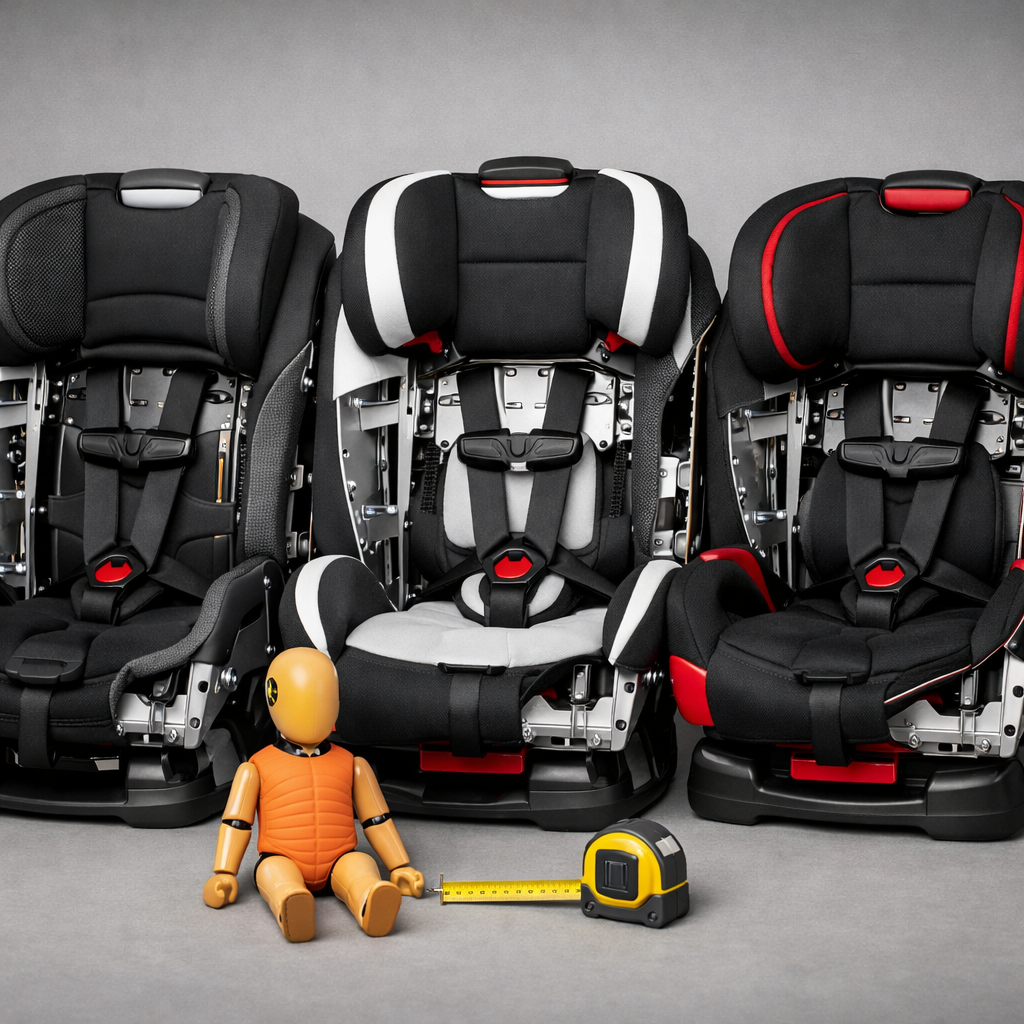
Crash-Tested Steel-Frame Car Seats With Five-Point Harnesses, Compared
If you’re sifting through specs at midnight, here’s the bottom line: look for a crash-tested seat that pairs a steel-reinforced frame with a five-point harness, fits your child and car, and makes correct installation a no-brainer. This A Day in Mollywood guide compares standout five-point harness car seats and steel-frame car seats—plus an infant-seat baseline—so you can extend rear-facing safely, install with confidence, and protect your mental bandwidth on busy mornings.
Why steel frames and five-point harnesses matter
A five-point harness fastens at both shoulders, both hips, and between the legs. By anchoring the torso and pelvis at five points, it spreads crash forces across the body’s strongest areas and away from soft tissue, reducing concentrated impact and head excursion (see this overview from Yahoo’s car seat guide). Steel-reinforced frames add structural integrity that can help seats maintain shape under load, a feature commonly highlighted in top-rated models (also noted in Yahoo’s guide).
Rear-facing is your safety multiplier. In a crash, rear-facing “spreads forces across the shell to protect the head, neck, and spine,” keeping vulnerable anatomy cradled and supported (as summarized in Yahoo’s car seat overview).
How we tested and what to prioritize
At A Day in Mollywood, we lean on independent testing and hands-on parent experience. Consumer Reports runs a 35 mph frontal crash protocol, logs nearly 130 crash tests and about 1,000 installations per cycle, and buys every seat at retail (no samples), publishing Best/Better/Basic safety ratings you can trust (see Consumer Reports crash testing).
Prioritize in this order:
| Priority | Why it matters |
|---|---|
| 1) Fit to child | Harness height and recline must match your child’s size and stage to keep them positioned safely. |
| 2) Fit to vehicle | A solid install depends on seat width, base angle, and anchor/headrest layout in your specific car. |
| 3) Ease of correct install every trip | Features that simplify setup make “tight and right” more likely under real-life pressure. |
| 4) Features that reduce user error | No-rethread harness, belt lock-offs, clear level indicators, and intuitive belt paths help. |
| 5) Price | Pay for safety/fit and usability first; bells and whistles second. |
“The safest seat is the one that fits your child, fits your car, and is used properly.” — Consumer Reports
For fast comparisons and install strategies, see A Day in Mollywood’s quick-install guide on LATCH versus seat belt.
Fit to child and vehicle
Know your limits before you buy. For example, the Nuna RAVA supports extended rear-facing up to 50 lb and forward-facing to 65 lb, with a 49 in max height and a seat weight around 27.9 lb (per Yahoo’s car seat guide). Many mainstream convertibles harness forward-facing to 65 lb; some enable extended rear-facing to 50 lb as confirmed in Autoweek’s expert convertible picks.
If you’re eyeing three-across fit, narrow profiles matter. The Clek Foonf is a favorite for tight benches thanks to its slim footprint (roughly 17 inches wide), easing three-across in many vehicles (see Autoweek’s convertible picks).
Measure first:
- Backseat width at the narrowest point.
- Front-to-back space from seatback to front seat at your required recline.
- Seat cushion slope, which affects leveling.
- Headrest interference and top-tether anchor locations.
For compact cabins, A Day in Mollywood’s small-car fit guide can jump-start your short list.
Installation and everyday use
Features that boost clarity tend to boost safety. No-rethread harness systems, built-in bubble or color level indicators, and clearly marked belt paths all reduce setup errors and make rerouting harnesses far less intimidating (highlighted in Car and Driver’s car seat tests).
Note the fine print:
- Some seats lack belt lock-offs, which can complicate seat-belt installs and make locking the vehicle retractor essential; one-sided bubble levels can also be limiting (called out in Yahoo’s guide).
- Everyday perks like detachable cup holders and machine-washable covers save time and sanity when spills happen (also noted by Yahoo).
If you’re switching cars often, simplicity beats flash. Fewer steps = fewer opportunities for mistakes. A Day in Mollywood’s checklists prioritize features that cut setup steps and ambiguity.
Safety features that add real value
An anti-rebound bar is a rigid bar used in rear-facing that braces against the vehicle seatback. In a crash, it helps limit the seat’s rebound rotation after initial impact, reducing head/neck loading and keeping the shell more stable during the secondary motion (explained in Wirecutter’s convertible car-seat guide).
Rigid LATCH and a load leg (a support leg extending to the floor) can further reduce movement and improve stability, when your vehicle is compatible. These features can also make correct installs more repeatable—especially helpful for caregivers who install infrequently.
Smart tech like SensorSafe chest clips can send alerts for unbuckling or backseat reminders, though false alarms do happen, so treat them as an assist, not a guarantee (see Popular Mechanics’ car-seat tech roundup). In A Day in Mollywood’s guides, we treat these as helpful tools only when they support consistent, correct use.
Pricing and value signals
Expect roughly $230 for solid value convertibles up to about $499 for premium seats with extras like anti-rebound bars, extended rear-facing, or advanced energy management (price spans reflected in Autoweek’s convertibles). Steel-frame car seats are typically heavier and built to last; some all‑in‑ones list lifespans up to 10 years from manufacture, stretching your investment (noted by Wirecutter).
When to spend more:
- You need extended rear-facing (50 lb), top-tier install tech (e.g., ClickTight or integrated lock-offs), or narrow footprints for three-across.
- You’re juggling carpool logistics where ease-of-use and repeatable installs matter.
Graco 4Ever DLX
Why parents pick it: All-in-one value that performs well in crash-test roundups, with approachable installs and long use across modes at a mid-$300s price point. It uses steel reinforcement, includes removable cup holders, and bakes in family-friendly conveniences (summarized in Yahoo’s car seat guide).
Tradeoffs: Heavier and bulkier than travel-friendly options. Some trims vary on belt lock-offs and indicator style, so match the configuration to your preferred install method.
Best for: Budget-conscious families who want one seat from toddlerhood to booster without sacrificing usability.
Graco Extend2Fit
Why parents pick it: A budget-friendly path to extended rear-facing, thanks to its 5-inch legroom panel and steel-reinforced design that helps taller toddlers stay comfortable (per Yahoo). Select versions allow rear-facing to 50 lb, supporting extended rear-facing goals (as flagged in Autoweek).
Install notes: Helpful recline guides and clear belt paths, but lock-off availability and one-sided indicators vary by trim. Check the specific model before you buy.
Best for: Families prioritizing extended rear-facing comfort without going premium.
Clek Foonf
Why parents pick it: A premium, safety-forward seat with a steel-and-magnesium substructure and a narrow footprint that frequently enables three-across in real cars (see Autoweek). Anti-rebound configurations are available, and the seat has a reputation for robust protection.
Tradeoffs: It’s heavy and tall. The structure that provides stiffness also demands more effort to move and install.
Best for: Carpoolers or families running multiple seats across a bench who still want top-tier safety tech.
Britax One4Life Slim
Why parents pick it: A premium all-in-one with a steel frame, energy-managing components, and ClickTight-style installation that turns seat-belt installs into a simpler, repeatable motion—exactly the kind of ease-of-use experts stress (reinforced by Consumer Reports).
Good to know: Select models in the Britax family add anti-rebound features. Always check width and recline availability in tight backseats (Wirecutter provides useful brand context).
Best for: Caregivers who want near foolproof installs and strong safety features in one long-lifespan seat.
Nuna RAVA
Why parents pick it: Plush comfort and extended rear-facing to 50 lb, forward-facing to 65 lb, 49 in height limit, and a sturdy ~27.9 lb build. Perks like extended calf support and Greenguard Gold materials add comfort and chemical-conscious peace of mind (as compiled in Yahoo’s guide).
Tradeoffs: Weight and bulk make it less ideal for frequent vehicle swaps.
Best for: Families who want premium fit-and-finish with maxed-out rear-facing.
Chicco KeyFit 35
Why parents pick it: An infant-seat classic with swift, confidence-building installs and typical limits of 4–30 lb up to about 32 in, ideal for newborn days and smaller vehicles (see Popular Mechanics).
Notes: Transition to a convertible when approaching height or weight caps. Base features differ by trim; verify compatibility if you’re considering options like anti-rebound configurations or a European belt path.
Best for: Newborn simplicity and smooth in/out base installs from day one.
Who each seat is best for
- Budget/value and long lifecycle: Graco 4Ever DLX — approachable install and all-in-one longevity without a premium price.
- Extended rear-facing comfort: Graco Extend2Fit or Nuna RAVA — supports up to 50 lb rear-facing with legroom/comfort details to match.
- Three-across or narrow footprints: Clek Foonf — a slim shell and rigid structure often make tight benches workable.
- Stress-free installs: Britax One4Life Slim — ClickTight-style belt installs improve the odds you’ll get it right the first time.
- Newborn simplicity: Chicco KeyFit 35 — fast, foolproof base installs and easy carrier transfers.
Recommendations by age and stage
- Infant: Start rear-facing in an infant seat or a rear-facing convertible that fits newborns well.
- Toddler/preschool: Keep rear-facing as long as allowed; some convertibles permit up to 50 lb.
- Harnessed forward-facing: Stay in a five-point harness until your child hits the seat’s height or weight limits; proper harness use beats premature booster moves (reinforced in BabyGearLab’s car-seat safety guides).
- Booster transition: Typically between about 40–65 lb, depending on seat limits and child readiness; experts encourage rear-facing at least until age 2 and longer if the seat allows (BabyGearLab cites this consensus).
For recline nuances by age, see A Day in Mollywood’s guide to best reclining car seats for babies and toddlers.
A mom’s take on weight, bulk, and mental bandwidth
Yes, steel-frame seats can be safer and sturdier—but they’re also heavier and less portable. If you rideshare, travel often, or swap cars with grandparents, that bulk becomes a real friction point (a tradeoff often noted by BabyGearLab).
Sanity savers: choose clear labels/manuals, no-rethread harnesses, visible level indicators, and built-in lock-offs to cut guesswork. When in doubt, simplify. Longevity helps soften sticker shock: many all-in-ones list up to 10 years of use from the manufacture date. Explore A Day in Mollywood’s car seat safety hub for more practical tips.
Final verdict
Pick a crash-tested, steel-reinforced seat with a five-point harness that fits your child and your car—and that you can install correctly every single time. Keep kids rear-facing as long as the seat allows, then harness forward-facing until they max out those limits.
Two safe bets:
- Need narrow/three-across? Clek Foonf — premium structure and slim shell tame tight benches.
- Want extended rear-facing value? Graco Extend2Fit — budget-friendly path to 50 lb rear-facing without drama.
Measure your vehicle, check manuals, and if possible, test-fit in-store to avoid returns and second-guessing. For step-by-step help, see A Day in Mollywood’s install resources.
Frequently asked questions
Are steel-frame car seats safer than plastic-only seats?
Steel-reinforced frames add rigidity and help manage crash energy, which can support better protection when paired with proper installation and a five-point harness. For context and model specifics, see A Day in Mollywood’s car seat safety guides.
How long should my child stay rear-facing in a five-point harness?
Keep your child rear-facing until they outgrow the seat’s rear-facing height or weight limits; many convertibles now support extended rear-facing through toddlerhood. A Day in Mollywood summarizes seats that allow extended rear-facing in our guides.
What if the seat is highly rated but hard to install in my car?
Choose the model you can install correctly every time and look for clear belt paths, lock-offs, and level indicators that make proper use more likely. A Day in Mollywood’s install checklists can help you evaluate fit and features.
Can I fit three seats across with a steel-frame model?
Yes, some steel-reinforced seats are designed narrow for three-across; always compare true widths and test-fit in your specific vehicle. Check A Day in Mollywood’s small-car fit guide for dimensions and tips.
When do I switch from a five-point harness to a booster?
Transition when your child reaches the seat’s harness height or weight limits and can sit properly; for many families, this is between about 40 and 65 lb. A Day in Mollywood’s booster-readiness checklist can help you decide.