
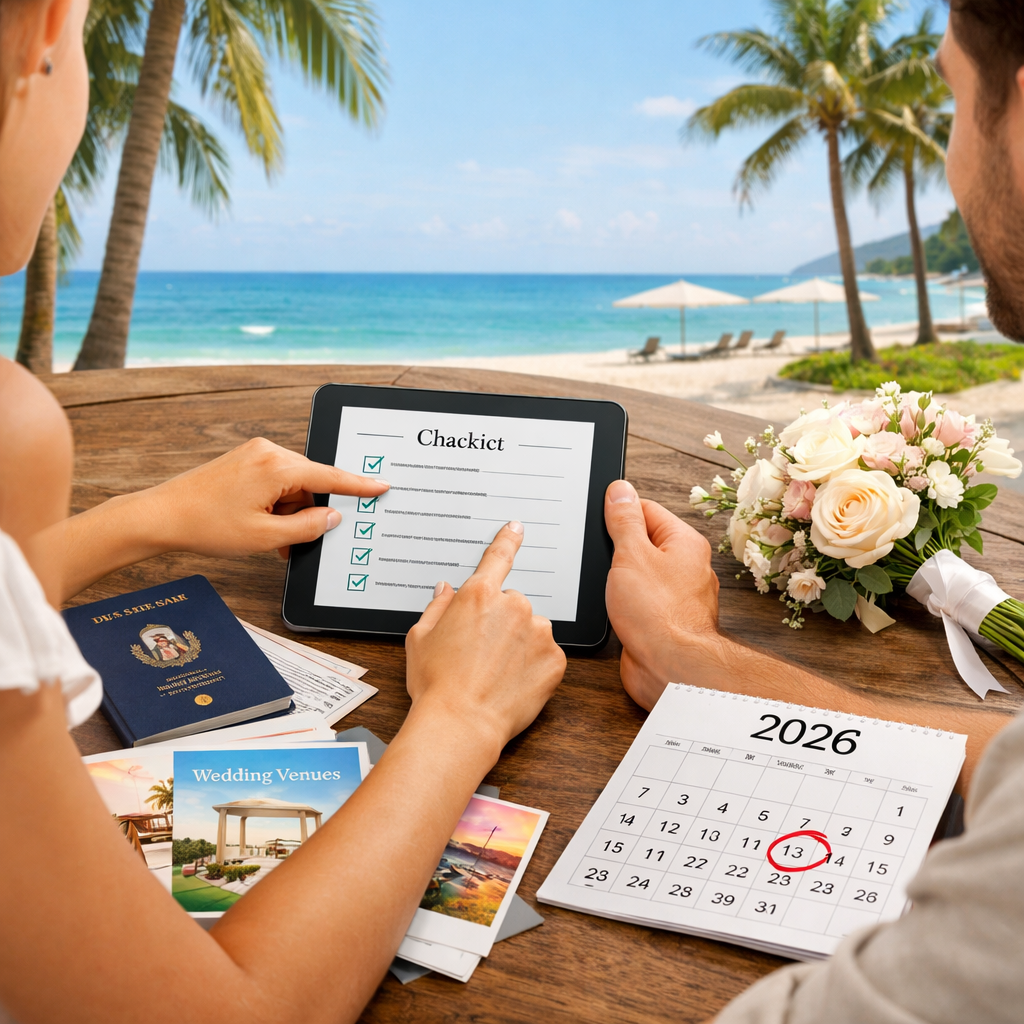
Destination Wedding Criteria Couples Need to Know for 2026
Planning a wedding away from home can be magical—and manageable—when you use the right criteria. If your celebration is outside your home region and requires most guests to travel and stay overnight, you’re in destination wedding territory. In 2026, couples are favoring accessible locations, streamlined itineraries, and venues with strong on-site support. This guide clarifies what qualifies as a destination wedding, how to choose legal vs symbolic ceremonies, where to focus your budget, and the planning steps that keep stress low and guest experience high. At A Day in Mollywood, we focus on guest-friendly logistics, family-first details, and clear timelines so you can be present.
What qualifies as a destination wedding
“A destination wedding is a celebration held outside the couple’s home region, typically involving guest travel and a smaller, multi-day itinerary. Most couples choose scenic ceremony spaces with on-site accommodations and experienced coordination to simplify logistics and maximize time together.” — summarized from Stonecliffe’s 2026 destination guide (source)
Common qualifiers that signal you’re planning a destination wedding:
- Most guests fly or drive beyond easy day-trip distance.
- You’re hosting a 3–5 day itinerary so guests can rest, celebrate, and explore.
- You’ll reserve room blocks and share travel logistics on your website.
- You’ll coordinate transportation and group activities where helpful. Most itineraries run 3–5 days, allowing downtime between events, as noted in Events by Kae’s planning guide (source).
Local vs destination: quick comparison
- Guest count: local often larger; destination typically leaner and more intimate.
- Travel needs: local = minimal; destination = flights/transfers and passports for many.
- Lodging: local = optional; destination = advisable room blocks and on-site options.
- Legal/permits: local = familiar rules; destination = venue/country-specific requirements.
Decide on legal or symbolic ceremony
Legal ceremony (40–50 words): A legal ceremony is recognized by the government where it occurs. You must meet destination marriage laws—licenses, witnesses, possible residency periods, and notarized or translated documents. Some countries require extra steps or waiting periods; research early to avoid last-minute hurdles, as flagged in Event Bay’s 2026 mistakes to avoid (source).
Symbolic ceremony (40–50 words): A symbolic ceremony is not legally binding. You complete the legal marriage at home—on your schedule—then host a fully personalized ceremony at the destination without paperwork pressure. Guests experience the vows and celebration the same way; you skip bureaucratic timelines and translations. Many A Day in Mollywood couples choose this route to cut stress and simplify travel days.
Decision flow
- Check legal/documentation and residency rules first (licenses, translations, officiant eligibility).
- If requirements are complex or time is tight, do the legal part at home and keep the destination ceremony symbolic.
- Confirm who can officiate locally and any venue/cultural rules.
- Add a clear note on invitations and your website about the ceremony type.
Set guest reachability and budget expectations
Choose destinations reachable with one flight plus a short transfer to reduce friction, costs, and kiddo meltdowns—guidance echoed in Bespoke Bride’s 2026 destination roundup (source). We encourage a “one-flight + short transfer” rule whenever possible. If passports are a barrier, consider U.S. territories like Puerto Rico for many guests, where U.S. citizens don’t need passports. Popular 2026 hotspots—Mexico, Italy, Greece, and southern Spain—balance romance and access, according to the LA Times’ 2026 destination hot list (source).
Guest budget line items to share early
- Flights (watch sales; set fare alerts)
- Lodging via room blocks (sample ranges vary: boutique $150–$350+, resort $250–$600+ per night)
- Airport transfers (group shuttles reduce costs)
- Meals outside hosted events
- Childcare/kids’ club or sitter services
- Excursions or spa add-ons
Choose the right destination type
All-inclusive resorts
- Pros: predictable per-guest pricing, streamlined planning, built-in vendor teams, easier headcount control.
- Consider if: you want an all-inclusive destination wedding with minimal vendor coordination and straightforward budgets.
Private villas/estates
- Pros: privacy, home-like layouts for families, potential late-night flexibility, exclusive-use feel.
- Consider if: you prefer multi-day house-party vibes and can bring in a planner to coordinate rentals and staffing.
Boutique hotels/historic venues
- Pros: character, distinctive photo backdrops, and experienced coordination teams familiar with local vendors.
- Consider if: design, cultural context, and a sense of place matter more than bundled packages.
Style-forward inspiration in 2026 includes sea-view villas, Mediterranean villages, and one-of-a-kind estates highlighted across trend reports; match the setting to your guest list and timeline.
Vet venues for on-site support and flexibility
Prioritize venues with on-site rooms, scenic ceremony spaces, and seasoned event coordination. Ask directly about:
- In-house planner or required day-of coordinator
- Backup ceremony/reception spaces and weather triggers
- Approved vendor lists and outside-vendor fees
- Personalization flexibility (music cutoffs, décor rules)
- Private buyout options for intimacy and noise flexibility
- Curfews, local sound ordinances, and after-party alternatives
Create a short-list comparison table
| Venue | Access (flights/transfer) | On-site Rooms | Backup Plan | Package Inclusions | Curfew | Estimated Costs | Cultural/Legal Support |
|---|---|---|---|---|---|---|---|
| Venue 1 | 1 nonstop + 30-min shuttle | 80 keys | Indoor ballroom | F&B tiers, basic décor | 10 pm | $$ | License help, bilingual staff |
| Venue 2 | 1 connection + 15-min taxi | 40 keys + nearby inns | Covered terrace | Ceremony + AV | 11 pm | $$$ | Officiant, translation |
| Venue 3 | Regional flight + ferry | Villa + cottages | Marquee/tent | Venue-only, BYO vendors | Flexible | $$–$$$ | Planner-required |
Build a realistic timeline and booking plan
Planning windows are tightening—industry reports note average destination timelines dipped below 18 months in 2026, so earlier booking protects dates and pricing, as highlighted in Wedinspire’s wedding trends report (source).
Month-by-month overview
- 18–12 months: Choose destination and venue; secure room blocks; hire planner; book photographer; decide legal vs symbolic.
- 12–9 months: Lock key vendors; launch the wedding website; send save-the-dates with passport/visa reminders.
- 9–6 months: Publish travel page; share group air/transfer options; do virtual tastings; set décor direction.
- 6–0 months: Collect RSVPs; finalize payments; assign seating; confirm day-of timeline and backups.
Reminders
- Review cancellation terms and outside-vendor fees before signing.
- Line up vendor backups and rental holds.
- Use QR-code RSVPs and digital seating charts to reduce admin.
Plan for weather and seasonality
Aim for shoulder-season dates—May–June or September—for a balance of weather, rates, and fewer crowds. Regions like Croatia are lovely May–October, with milder temps and lighter crowds in spring and early fall. Always build a Plan B: reserve tents or indoor alternatives and document the pivot triggers and who decides.
Prioritize guest experience without overwhelm
Curate food and beverage to limit decision fatigue: mix passed bites, a couple of standout stations, and a shorter entrée list. Simple, on-trend entertainment—Champagne towers, build-your-own bars, interactive oyster shuckers, nostalgia games, or lawn games—creates energy without over-scheduling, a tack supported in Benchmark Resorts’ 2026 wedding trends (source).
Plan a light 3–5 day itinerary
- Day 1: Welcome drinks or dessert bar
- Day 2: Free time + optional group activity
- Day 3: Ceremony + reception
- Day 4: Farewell brunch
- Day 5: Optional excursions or pool day
Sustainability and local sourcing choices
More than half of destination couples now prioritize eco-conscious elements—reflect this in vendor selection, menus, and rentals, according to recent trend reports. Practical swaps:
- Locally grown florals and seasonal cuisine
- Reusable or rented décor and vessels
- Reduced-waste favors: handwritten notes, refillable water bottles, illustrated local maps
Share your sustainability notes on the website and consider a small donation or give-back option in lieu of favors.
Vendor strategy and day-of coordination
Hire a local or destination-savvy planner who understands paperwork, cultural norms, and vendor practices; they’ll also manage contingencies and the timeline. Ask them to prepare a precise run-of-show with transport buffers and weather pivots.
Day-of run-of-show (sample)
- Getting ready: hair/makeup windows; snack/hydration plan
- Transport: first look shuttle + guest pickup buffers
- Ceremony: start time, music cues, rain call deadline
- Cocktail hour: photo list, tray-pass schedule
- Reception: toasts, first dances, course pacing
- Backup triggers: wind/rain/heat thresholds, who decides, when to pivot
- Send-off: after-party or quiet hours plan
Trend-forward design a coordinator can execute: sculptural florals, asymmetrical arches, layered candlelight, and modern music moments (think string + synth or electric guitar) for fresh-but-timeless vibes.
Communication plan and wedding website
Guest experience starts months before wheels up. Clear websites, convenient room blocks, and timely updates reduce confusion—a consistent theme in Inside Weddings’ 2026 planning tips (source).
Recommended website structure (Zola/Squarespace templates make this plug-and-play)
- Travel: passports/visas, flight tips, transfers, baggage notes
- Room blocks: booking codes, deadlines, cancellation policies
- Itinerary: event times, locations, map pins
- Dress codes by event and terrain notes (sand, cobblestone)
- FAQs: ceremony type, weather, currency, tipping
- Kids and accessibility: childcare options, stroller access, nursing spaces
- Local map: cafés, pharmacies, ATMs, playgrounds
Low-lift tech
- QR-code RSVPs and digital seating charts
- Message banner for weather/transport updates
- Shared photo album link for guest uploads
Contingency planning and insurance
Normalize backups. Prepare alternatives for ceremony location, transport, lodging overflow, and vendors—and review cancellation clauses before deposits. Travel insurance (and optional wedding insurance) can cover disruptions, medical issues, or severe weather common to destination events.
Simple contingency matrix
| Trigger | Threshold | Who Decides | Pivot Time | Communication |
|---|---|---|---|---|
| Rain | >40% chance 4 hours prior | Planner + couple + venue | T-3 hours | Website banner + text thread |
| Wind | >20 mph sustained | Planner + venue | T-2 hours | Signage + coordinator announcements |
| Heat | >90°F / 32°C | Planner + catering | T-2 hours | Water stations + shaded seating |
| Transport delay | >60 min | Planner + transport lead | Rolling | Group text + lobby signage |
Packing and travel with kids made easier
Family packing checklist
- Medications, mini first-aid kit, sunscreen/bug spray, electrolytes
- Collapsible stroller, compact baby carrier, lightweight travel crib, portable sound machine
- Favorite snacks, spill-proof water bottles, quiet flight activities
- Swimsuits, UPF layers, sun hats, extra pajamas
Airport/flight strategies
- Prioritize nonstop routes; pre-book bassinets or a row if possible.
- Schedule transfers with car seats and share instructions in the website FAQs.
- Build kid-friendly free time into the itinerary and list trusted childcare options.
Frequently asked questions
What distance or travel needs qualify as a destination wedding
If your celebration is outside your home region and requires most guests to travel and stay overnight—often over a multi-day itinerary—it qualifies as a destination wedding. At A Day in Mollywood, we use this simple rule of thumb to guide planning.
Is a destination wedding cheaper than a local wedding in 2026
It can be, especially with smaller guest lists and all-inclusive packages, but flights, transfers, and any outside-vendor fees can offset savings. We recommend modeling both scenarios before deciding.
How far in advance should we book a destination wedding
Aim to secure your venue and room blocks 12–18 months out. A Day in Mollywood suggests prioritizing venue and room blocks first within that window.
Should we get legally married at home and have a symbolic ceremony
Yes—many couples do to avoid residency rules, translations, and tight deadlines. At A Day in Mollywood, we often recommend this when timelines or paperwork are complex.
What hidden fees should we budget for
Watch for vendor travel or outside-vendor fees, service and resort charges, setup/breakdown, overtime, and paid backup-space holds. Ask for an all-in, out-the-door estimate before signing.