
How to Choose a Reclining Stroller for Toddlers, Step-by-Step
When you’re shopping for a toddler-ready stroller, start with the features that make naps and everyday errands easier: a secure multi-position recline, a five-point harness, good wheels and suspension, and a compact fold you can actually lift. If you came here asking for top-rated reclining strollers for toddlers, the short answer is to prioritize nap comfort and push quality first, then match weight, fold, and budget to your routine. Below, I’ll walk you step-by-step through quick in-store checks, what truly matters for toddler naps, and smart picks that don’t break the bank—Molly-tested, parent-approved.
Why reclining strollers matter for toddlers
Comfortable recline keeps toddlers happier longer—on errands, park days, and travel. A supportive seat, adjustable footrest, and ventilated, UPF canopy can turn a quick walk into a solid nap window. Roomy padding, multiple reclines, and breathable canopies all improve comfort and extend real-world stroller mileage as they grow, according to an age-by-age stroller guide from The Bump (toddler section) The Bump’s guide.
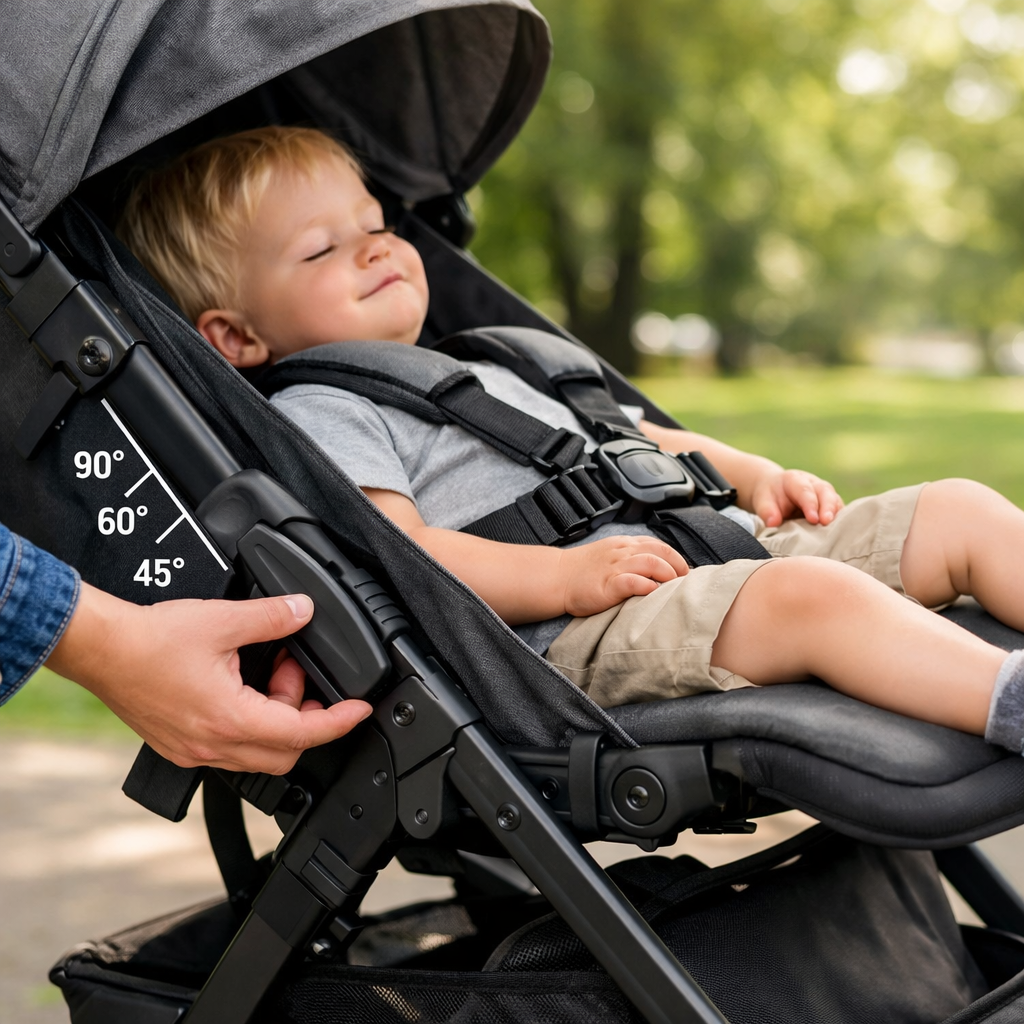
“Multi-position recline” means the seatback adjusts to several angles—from upright for sightseeing to deeper reclines for rest—so you can fine-tune comfort as your toddler tires. A safe mechanism moves smoothly yet locks firmly to prevent surprise slumps or collapses, a core buying-tip echoed in the Baby Trend stroller guide.
Many modern strollers now offer fully reclining seats and car-seat compatibility, which boosts flexibility from baby to toddler and helps a single stroller cover more stages Consumer Reports stroller buying guide.
Step 1: Set your priorities and budget
Start with a reality check: your sidewalks, your trunk, your stairs, your budget. Rank your needs so you don’t overbuy.
- Non-negotiables: safety and stability.
- Big differentiators: terrain and maneuverability, stroller weight and foldability, budget, and whether you need a travel system for a younger sibling or future baby Consumer Reports stroller buying guide; BabyGearLab’s testing insights.
Budget bands to expect: under $300 typically means lighter frames and basic reclines; moving up adds smoother push, better suspension, and upgraded canopies. Make a quick 1–5 scoring matrix (safety, nap comfort, push quality, fold/carry, value) and shortlist your top three.
Step 2: Safety first checks
Make these in-store checks fast and hands-on. Stability shows up before specs do.
- Frame stability: assemble, then gently shake the frame to spot wobble; press down on the seat edge to check tipping risk (keep a hand on the handlebar for control). These are classic pre-buy tests highlighted in the Baby Trend stroller guide.
- Recline lock: cycle through each position several times; it should click or lock solidly every time.
- Brakes: engage/disengage the foot brake in flats and slight slopes; some higher-end models add hand brakes for hilly neighborhoods.
These are the same checks I use when testing strollers for A Day in Mollywood.
Definition: Five-point harness
“A five-point harness secures your child at the shoulders, hips, and between the legs, limiting movement and spreading force across stronger body areas during sudden stops. It’s considered the safest stroller harness and should be snugged and re-adjusted as your toddler grows.”
Step 3: Evaluate recline quality and nap comfort
Naps depend on details. Look for a multi-position recline with smooth adjustability and a supportive seat.
- Nap-friendly recline: toddler seats commonly offer several recline positions that help kids drift off without slouching BabyGearLab’s testing insights.
- Canopy and airflow: choose large UPF canopies with peek windows or mesh panels to keep air moving and let you check in without waking them Strolleria’s stroller guide.
- Lie-flat options: a near-flat recline is ideal for naps; some models create a flatter space by lifting the footrest upward to enclose the leg area Babylist’s stroller guide.
Pro tip: An adjustable footrest supports calves and reduces dangling—great for comfort and posture. If leg-dangling is a persistent issue, see our tall-toddler strategies here: Top tall toddler strollers that prevent leg dangling.
Step 4: Test maneuverability, wheels, and suspension
Push quality is the difference between a joy ride and a slog.
- In-store test: weave, U-turn, sudden stop, then pop a small curb. Hang your diaper bag or purse on the handle to simulate real load Strolleria’s stroller guide.
- Tires: rubber, foam-filled, or air-filled beat hard plastic for durability and a smoother ride, especially outdoors.
- Suspension: all-wheel suspension reduces jostling on cracked sidewalks, parks, and gravel. If you’re often off pavement, consider all-terrain wheels.
Step 5: Check weight, fold, and carry
Match the stroller to your trunk, your stairs, and your arms.
- Practice the fold/unfold in-store, then lift the folded stroller as if loading your car. It should feel manageable every day, not just on paper Strolleria’s stroller guide.
- Measure your trunk opening and doorway/elevator widths. Self-standing folds help in small entryways and apartments.
- If travel is frequent, a compact fold stroller can be a game-changer.
Typical size and carry comparisons:
| Stroller category | Typical folded size | Weight range | Carry style |
|---|---|---|---|
| Ultra-compact/Travel | Very small, overhead-bin-ish | 11–16 lb | Shoulder strap/carry handle |
| Lightweight/Compact | Small trunk-friendly | 15–22 lb | One-hand carry or handle |
| Full-size | Medium-to-large | 22–28+ lb | Two-hand lift, trunk load |
| All-terrain | Bulky | 27–35+ lb | Two-hand lift, larger trunk |
Step 6: Assess seat fit, harness, and canopy coverage
You want upright comfort and cozy naps in the same seat.
- Fit and support: check seat width, depth, and cushioning. Roomy seats with supportive backs and multiple reclines serve toddlers better long-term The Bump’s guide.
- Growth runway: look for a stroller weight limit around 50 lb for extended use BabyGearLab’s testing insights.
- Coverage and comfort: prioritize large, ventilated canopies (UPF helps) and peek windows. Adjustable handlebars help caregivers of different heights share the load Strolleria’s stroller guide.
- Nice-to-have: a reversible seat lets you swap between parent- and world-facing, useful for soothing or sightseeing.
Step 7: Confirm everyday practicality and compatibility
A great stroller earns its keep in daily life.
- Storage: practice sliding your diaper bag in/out with the seat reclined. A basket you can’t access is a dealbreaker.
- Car seats: if you also have a baby, verify car-seat compatibility or adapters; a travel system lets you click in the infant seat for quick transfers Babylist’s stroller guide.
- Fit test: confirm it fits your trunk, front door, and elevator. If possible, bring your actual car seat to test in-store Strolleria’s stroller guide.
Definition: Travel system
“A travel system pairs a compatible stroller with an infant car seat so you can move a sleeping baby from car to stroller without unbuckling—handy when juggling a baby and a toddler on the go.”
Step 8: Compare warranties, parts, and real-world reviews
Durability and support protect your budget.
- Warranties and parts: confirm coverage and that replacement wheels, canopies, and harness pads are easy to get.
- Reviews with substance: scan for recline failures, brake wear, storage rips, and customer-service responsiveness.
- Final check: separate must-have safety from nice-to-have extras before you buy—advice consistent with core buying principles in the Baby Trend guide (recline locks, brakes, stability).
Molly’s quick picks by use case and budget
These reflect real-world use in my own testing for A Day in Mollywood.
- Daily use, smooth push: UPPAbaby Cruz V3 — praised for build quality and an easy, refined push, making it a strong everyday choice with nap-friendly recline Forbes’ best strollers.
- Travel-ready compact: Babyzen YOYO2 — an ultra-compact that folds small enough for many overhead bins and zips through airports when you need a compact fold stroller ABC News round-up.
- Nap-forward comfort: Nuna MIXX Next — full recline, adjustable footrest, and one-handed fold make it a toddler nap-friendly stroller that still handles daily errands with ease.
- Budget-smart everyday: Look for multi-position recline, larger canopies, and higher weight limits even under $300—features now common across value tiers Consumer Reports stroller buying guide.
For more stroller talk and real-life tips, find us on Instagram and Pinterest—and browse our stroller stories: A Day in Mollywood stroller guides.
Red flags to avoid
- Weak or finicky recline locks; always cycle the recline several times to confirm a firm lock.
- Hard plastic wheels with no suspension if you have rough sidewalks; choose rubber, foam-filled, or air-filled with suspension.
- Tippy frames or unreliable brakes; shake the frame, add weight to the seat edge, and test brake engagement thoroughly.
Simple store test you can do in five minutes
- Minute 1: Frame and brakes — shake for wobble; engage/disengage brake; try hand brake if present.
- Minute 2: Recline — cycle to each position twice; confirm a firm, consistent lock.
- Minute 3: Push test — turns, stops, small curb; add your purse/bag to simulate load.
- Minute 4: Canopy/seat — check ventilation window, seat width, harness adjustability and padding.
- Minute 5: Fold/carry — practice the fold, confirm self-stand if needed, and lift it like you’re loading your trunk.
Frequently asked questions
What makes a recline truly toddler-friendly?
On A Day in Mollywood, we look for a multi-position recline that locks firmly, good head/torso support, and a ventilated canopy. A five-point harness keeps them secure as they shift during sleep.
What weight and age limits should I look for?
We suggest aiming for a stroller rated up to about 50 lb for longer-term use, and checking that the harness and seat adjust as your toddler grows. Many toddler-ready models start around 6 months and go well into preschool.
How can I tell if a stroller will handle my neighborhood terrain?
Choose rubber, foam-filled, or air-filled tires with suspension and do a push test over turns, stops, and a small curb. For cracked sidewalks or parks, prioritize all-wheel suspension.
Do I need travel-system compatibility for a toddler?
It’s optional unless you also have a baby using an infant car seat. In our checklists, focus on recline comfort, wheels, and fold for a toddler-only setup.
What are the most common mistakes parents make when choosing a reclining stroller?
We see parents skip an in-store test, overlook wheel quality and suspension for local terrain, and not check how the recline locks. Many parents also forget to test the fold and lift for true carrying weight.