
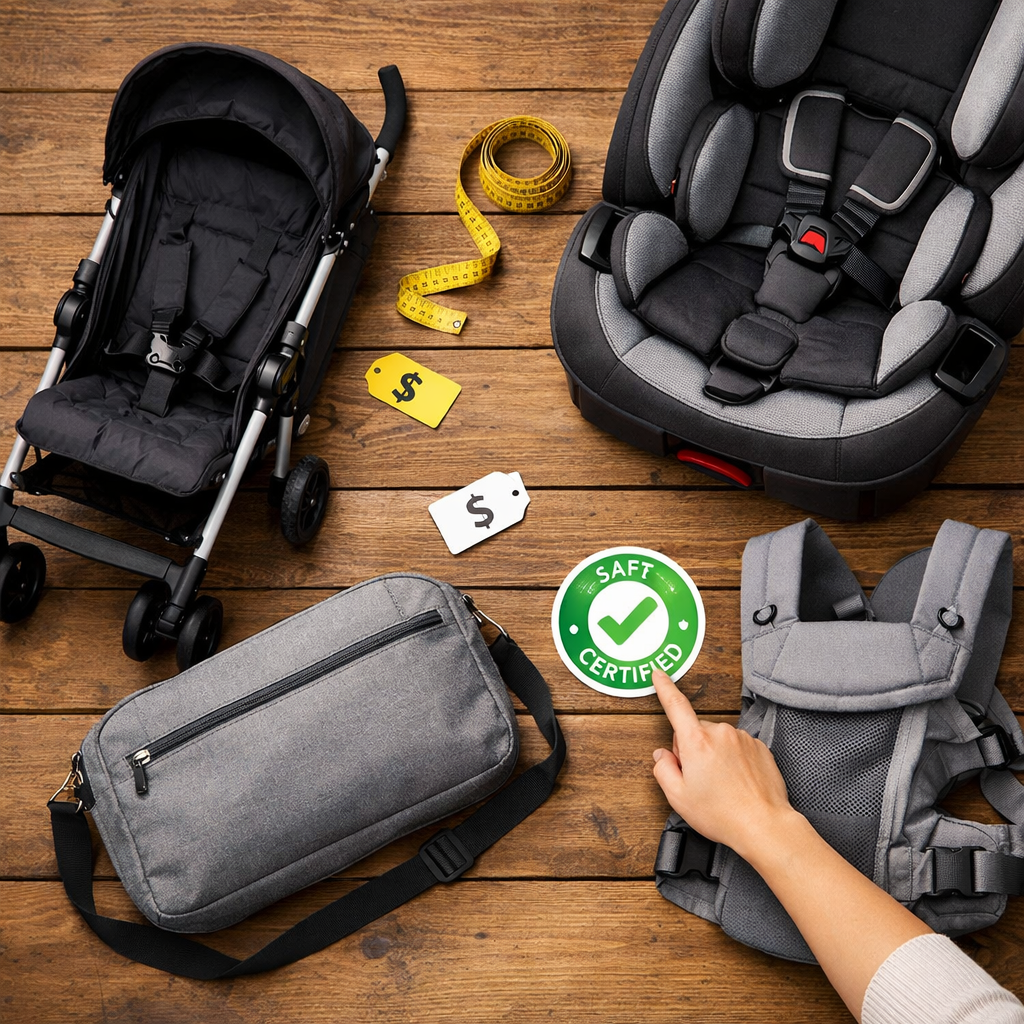
How to Choose Lightweight Baby Gear Without Sacrificing Safety or Budget
Lightweight baby gear should make your days smoother—not more expensive or less safe. The quickest path: match gear to your real routine, set a clear budget, and verify safety standards before you fall for a flashy fold. Independent reviewers regularly test crash performance, stability, and ease of use, so you don’t have to guess [4]. Below, you’ll find a simple plan, must‑check safety features, and quick comparison tables to help you choose lighter, portable baby gear that fits your life and your wallet.
Start with your real life and a clear budget
Start with how you actually move through a week, then shortlist gear that serves those moments. Adapt this simple planning flow—designed for lightweight picks—to stay focused and spend wisely: define your primary use (travel, errands, city sidewalks, transit), frequency, storage constraints (trunk, hallway, stairs), and a realistic budget range [1; 2].
- Use‑case to gear:
- Public transit and travel: choose an overhead‑bin‑friendly travel stroller, an infant car seat with easy LATCH installation, and a compact travel crib for overnights [2; 3].
- Suburbs and errands: look for a lightweight full‑size stroller with a bigger basket and an infant car seat with a stable base that fits your vehicle.
Travel stroller — definition (40–50 words) A travel stroller is a compact stroller built for portability with a quick, simple fold and a low frame weight. Many models collapse small enough for airline overhead bins and excel in airports, rideshares, and tight hallways. Plenty under $500 are sturdy and smooth [2].
Know the must-have safety standards
Consumer Reports buys baby products and runs rigorous, independent safety and usability tests. Their top picks frequently emphasize UPF canopies, one‑handed folds, and especially strong fit‑to‑vehicle scores for car seats—useful signals when you’re weighing lighter options [4].
Non‑negotiables by category:
- Strollers: a secure five‑point harness, reliable brakes, and a stable frame. In cities, experts like Dr. Benjamin Ho recommend a one‑hand fold for buses, trains, and stairs [5].
- Car seats: a current federal certification label, correct harness system, a stable base, and proper fit‑to‑vehicle. Cross‑check independent crash‑test results before you buy or replace a seat [4].
- Materials and emissions: GREENGUARD Gold and OEKO‑TEX (Class I) labels indicate lower chemical emissions and fewer harmful substances—useful signals on fabrics and foams.
LATCH — definition (40–50 words) LATCH stands for Lower Anchors and Tethers for Children, a standardized system for installing car seats using built‑in anchors instead of a seat belt. When you follow both the car seat and vehicle manuals, correct LATCH use can reduce installation errors and improve stability, especially for infant bases.
Compare by category and weight to function
Use the “lightest that still does the job” rule. Compare actual weights, folds, safety features, and everyday function—not just marketing terms.
Category comparison at a glance
| Category | Typical weight | Fold/pack type | Age/weight range | Standout safety features | Best for |
|---|---|---|---|---|---|
| Travel stroller | 12–16 lb | Compact, often tri‑fold | 6 mo+ (newborn with compatible car seat) | Five‑point harness, reliable brakes | Airports, rideshares, stairs, small trunks |
| Lightweight full‑size | 17–22 lb | One‑hand, mid‑size fold | Newborn+ with flat recline/car seat | Larger wheels, sturdier frame, harness | Daily errands, suburban sidewalks |
| Infant car seat (carrier) | 7–10 lb seat shell | Base + click‑in/out | 4–35 lb (model dependent) | Side‑impact protection, anti‑rebound bar, LATCH | Newborn–12+ months, easy transfers |
| Soft‑structured carrier | 1–2 lb | Folds flat into diaper bag | 7–45 lb (model dependent) | Wide waistband, lumbar support | Hands‑free naps, longer walks |
| Travel crib | 11–15 lb | Backpack or shoulder carry | Newborn–3 yrs (model dependent) | Stable frame, firm mattress fit | Overnights, grandparents’, road trips |
Weight‑to‑function quick take:
- Travel strollers and lightweight full‑size models can stay safe and maneuverable under $500; many add UPF canopies and one‑hand folds without bulk [2].
- For long walks and growing babies, soft‑structured carriers generally outlast slings in comfort—prioritize a supportive waist belt for your back and shared caregiver fit [6; 5].
Strollers and travel systems
If you’ll lift and fold it daily, prioritize a compact fold, low frame weight, and a harness that’s easy to adjust quickly. Travel strollers under $500 can be lightweight, sturdy, and even overhead‑bin approved if you’re flying often [2]. Consumer Reports highlights the Nuna TRVL LX for being light yet smooth‑riding, with a UPF 50+ canopy and a one‑handed fold that simplifies real‑world use [4]. If you need versatility, some convertible and double strollers still deliver safe, maneuverable performance below $500 [2]. Dr. Benjamin Ho’s tip holds: for city living, a one‑hand fold is essential for transit and stairs [5]. If your kiddo runs tall, our guide to top tall toddler strollers can help you keep legs supported without extra bulk.
Travel stroller vs. lightweight full‑size vs. jogger
| Stroller class | Typical fold size | Suspension/tires | Seat recline | Car seat compatibility | Typical weight | Best for |
|---|---|---|---|---|---|---|
| Travel stroller | Very compact, overhead‑bin | Basic; smaller wheels | Multi‑position; some near‑flat | Often with adapters | 12–16 lb | Planes, rideshares, tight spaces |
| Lightweight full‑size | Mid‑compact, trunk‑friendly | Better suspension; larger wheels | Deeper recline; roomier seat | Often built‑in or adapter‑based | 17–22 lb | Daily errands, uneven sidewalks |
| Jogger | Bulky, wide footprint | Robust suspension; air tires | Upright to moderate recline | Often adapter‑based | 24–30 lb | Runs, parks, mixed terrain |
Note: The Nuna Triv Next + Pipa Aire RX travel system has earned strong marks for safety and fit‑to‑vehicle—helpful when you want a lighter setup that still installs securely [4].
Car seats
A lighter infant car seat makes every transfer easier—as long as installation is rock‑solid. Budget‑friendly and safety‑forward, the Graco SnugRide SnugFit 35 fits babies 4–35 lb and adds a no‑rethread harness, infant cushions, an anti‑rebound bar, and an easy LATCH base [7]. Planning ahead for narrow back seats? The Chicco MyFit’s slim width (about 17.5") and base (around 16") can help with future three‑across; it converts from a 25–65 lb harness to a 40–100 lb booster (up to 57") [7]. Before buying new—or replacing an older seat—review independent crash‑test roundups and fit‑to‑vehicle notes from Consumer Reports [4].
Baby carriers
Comfort extends your carrying window, so look for ergonomic designs you’ll wear for months. Structured carriers are typically better for longer carries; prioritize wide, supportive waist belts and easy adjustability for multiple caregivers [6; 5]. If you’re considering slings, review CPSC guidance and the newer federal sling safety standard to ensure safe positioning and breathable fabric [5].
Quick carrier checklist:
- Weight limit that covers your baby’s growth
- Newborn inserts or built‑in infant fit
- Breathable fabric for warm weather
- Front/hip/back carry options
- Simple, intuitive adjustments
Travel cribs and sleep gear
For portable sleep, ease of setup matters as much as weight. The BabyBjorn Travel Crib Light is widely noted for being truly lightweight with fast, intuitive assembly—ideal for hotel rooms or grandparents’ houses [3]. Testing outlets like BabyGearLab rank sleep gear for stability, mattress fit, and usability; skim their category notes before purchasing [8].
Portable sleep shortlist
| Model | Weight | Setup time | Mattress/pad thickness | Packed size (approx.) | Sheet fit |
|---|---|---|---|---|---|
| BabyBjorn Travel Crib Light | ~13 lb | 30–60 seconds | Firm, thin travel pad | Compact shoulder carry | Proprietary fitted sheet |
| Guava Lotus Travel Crib | ~13 lb | ~1 minute | Firm, thin travel pad | Backpack carry | Proprietary fitted sheet |
| Lightweight playard (basic) | 18–25 lb | 2–5 minutes | Thin pad, check fit | Larger, rectangular bag | Standard playard sheets |
Try before you buy and check the fit
Hands‑on testing prevents buyer’s remorse.
- Strollers: confirm a true one‑hand fold, easy curb “pop,” brake access in sandals, basket capacity, a carrying strap, trunk fit, and balance with a diaper bag clipped on.
- Car seats: test installing the base with LATCH and seat belt, check the level indicator, confirm front‑seat clearance, verify newborn fit, and practice click‑in/out from the stroller.
When possible, buy from retailers with generous returns or test in‑store; real‑world fit‑to‑vehicle and ease of use are core to safety and ongoing satisfaction [4; 8].
Buy smart with new versus secondhand
Mix new and used to stretch your budget safely. Buy car seats new (safety‑critical, potential unknown crash history), but consider secondhand for lower‑risk items like bouncers or large strollers—only after verifying recall status, manuals, and condition [1]. Quality gear often holds up and resells well, offsetting the initial spend [2].
Secondhand inspection tips:
- Check frame welds for cracks and signs of stress
- Test harness webbing and buckles for fraying or sticking
- Engage brakes firmly; verify wheel wear and wobble
- Inspect fabric for tears and secure stitching
- Request manuals/model numbers to run recall checks
Keep your registry minimalist and phase purchases
Register for what you’ll use in the first six months, then reassess as baby grows—this curbs clutter and buyer’s remorse [1]. Time big‑ticket purchases with completion discounts from major retailers (Amazon, Target, Babylist) to stretch your budget [9]. Smart swap: a durable, well‑organized diaper backpack handles everyday family life better than a single‑purpose “diaper bag.” Choose a smaller, shape‑retaining backpack for quick outings [9; 6].
A Day in Mollywood’s take on balancing portability, safety, and cost
In our house, one versatile stroller beats three niche options every time. Buy intentional, not impulsive: a travel stroller for tight spaces and a lightweight full‑size for everyday walks can both be safe and maneuverable under $500 when you prioritize the right features over extras [2]. We focus on everyday usability and cost over add‑ons.
Molly’s short list:
- Graco SnugRide SnugFit 35 — a lighter, budget infant seat with a no‑rethread harness, infant cushions, anti‑rebound bar, and easy LATCH base [7].
- BabyBjorn Travel Crib Light — fast setup, feather‑light for trunk and airport hopping [3].
Five‑point harness — definition (40–50 words) A five‑point harness uses two shoulder straps, two hip straps, and one crotch strap that join at a central buckle. Properly adjusted, it secures a child’s shoulders, hips, and pelvis to limit movement in sudden stops or impacts, improving restraint performance in both strollers and car seats.
Frequently asked questions
How light is “lightweight” for strollers, car seats, and travel cribs?
Many travel strollers weigh 12–20 lb, infant car seat shells can be under 10 lb (without the base), and popular travel cribs often pack under 15 lb while staying sturdy and quick to set up.
Which safety labels and certifications should I look for?
Check for a current car seat certification label, a five‑point harness, and strong brakes. For materials, GREENGUARD Gold and OEKO‑TEX Class I help; independent testing from trusted outlets adds confidence [4].
Is it safe to buy baby gear secondhand and what should I avoid?
Yes—if you verify recalls and condition. At A Day in Mollywood, we always buy car seats new and only consider used strollers or bouncers after inspecting frames, harnesses, brakes, and fabrics and confirming model numbers for recalls [1].
How do I test a stroller or car seat for fit and ease of use before committing?
Fold and lift the stroller one‑handed, check brake access, and make sure it fits your trunk—this is how we assess gear at A Day in Mollywood. For car seats, test base installs with LATCH and seat belt, confirm the recline level, and check front‑seat clearance once installed.
What’s worth a small splurge versus a save when choosing lightweight gear?
On A Day in Mollywood, we splurge on daily‑use items that impact safety or comfort (stroller frame, infant car seat, ergonomic carrier) and save on accessories, using completion discounts and vetted secondhand finds to cover the rest [1; 9].