
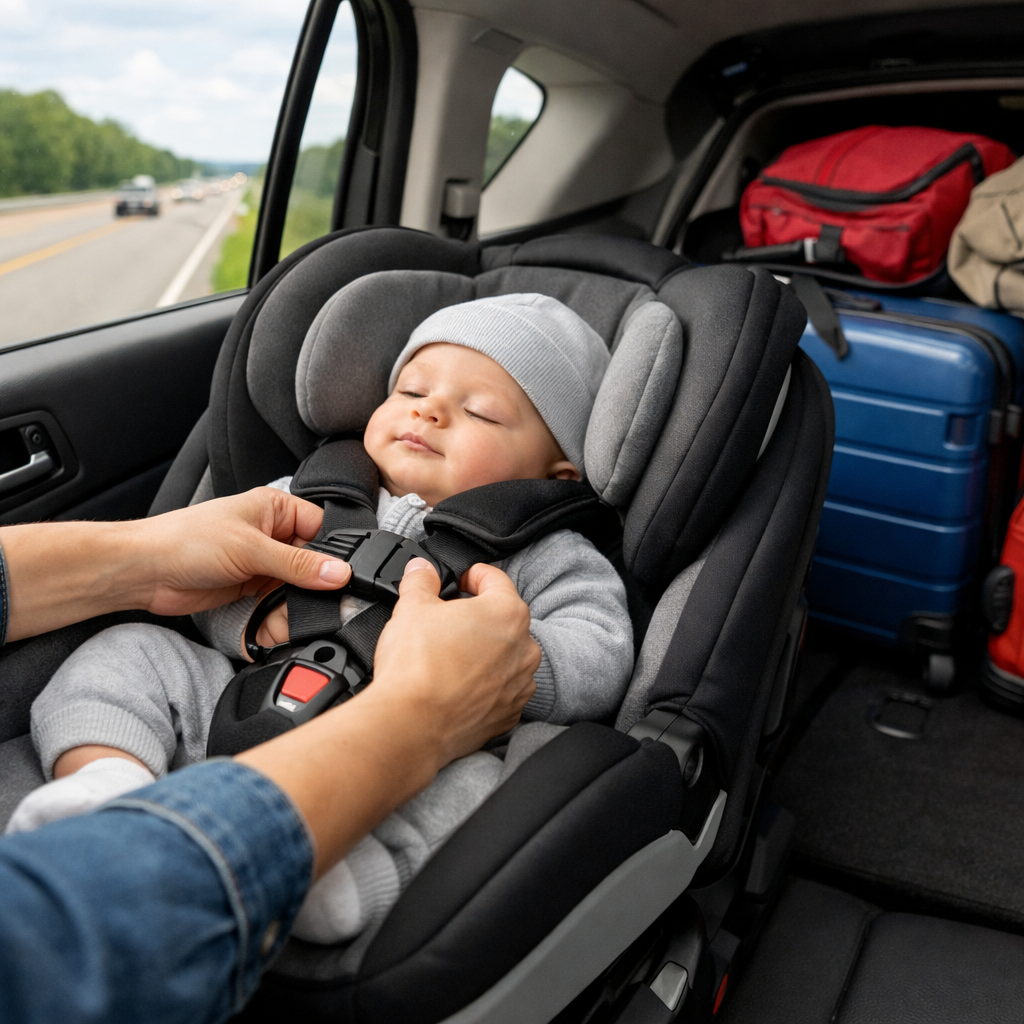
Parent-Tested, Road-Trip Ready: Safest Infant Car Seats for Travel
Traveling with a baby means juggling naps, luggage, and budgets—often in tight cars or quick rideshares. Here’s the bottom line: the safest infant car seats for travel are the ones you can install correctly every single time, in your actual vehicle, with features that help you avoid mistakes under pressure, a point echoed by Consumer Reports testing priorities on ease of use and fit. At A Day in Mollywood, that’s the standard I use on every trip. To help, I pulled parent-tested picks that balance crash protection, installation confidence, portability, and stroller/airline practicality.
A “travel-safe infant car seat” is one that consistently installs securely across cars, offers strong side-impact and energy absorption, supports base-free installs (ideally with a European belt path), and pairs smoothly with a stroller to cut down on stressful transfers. Those four checks keep real families safer on real trips.
Quick-compare our top travel picks:
| Model | Weight (carrier) | Fit limits | Key safety features | Base-free install option | Travel-system compatibility | Best for | Price tier |
|---|---|---|---|---|---|---|---|
| Chicco KeyFit 35 / Max ClearTex | ~10 lb / ~9.5 lb | 4–35 lb, up to 32 in | SuperCinch LATCH, level indicators; Max ClearTex adds European routing | Yes; Max ClearTex has European belt path | Chicco strollers; many adapters | Overall road trips, rideshares | Mid |
| Graco SnugRide SnugFit DLX (Lite) | ~9–10 lb (Lite: 7.6 lb) | 4–35 lb, up to ~32 in | Anti-rebound base, no‑rethread harness | Yes (American routing) | Graco strollers; wide third‑party adapter support | Budget travel, multiple vehicles | Budget |
| UPPAbaby Mesa V2 | ~9.9 lb | 4–35 lb, up to 32 in | Red‑to‑green base indicator, no‑rethread harness | Yes (American routing) | Seamless with UPPAbaby Vista/Cruz/Minu | Frequent vehicle swaps, fast installs | Premium |
| Clek Liing | ~9 lb | 4–35 lb, up to 32 in | Load leg, rigid LATCH, slim 16.9 in width | Yes (European routing) | Clek + adapters | Small cars, three‑across | Premium |
| Nuna PIPA Aire / Aire RX | ~6 lb / just over 7 lb | 4–30 lb, up to 30 in | Load leg base, no‑rethread harness, European routing | Yes (European routing) | Nuna strollers; adapters | Airports, stairs, rideshares | Premium |
| Doona Infant Car Seat & Stroller | ~16–17 lb | 4–35 lb, up to 32 in | Integrated stroller, anti‑rebound handle; NHTSA 5‑star ease‑of‑use | Yes (American routing) | Self-contained | Urban/airport sprints | Premium |
| Cybex Cloud T | ~12–13 lb | 4–35 lb, up to ~32–35 in | Linear side‑impact, load leg, ergonomic recline off‑car | Yes (European routing) | Cybex + adapters | Maximum safety features | Premium |
| Britax Willow S | 9.7 lb | 4–30 lb, up to ~32 in | Energy‑absorbing shell, stable base | Yes (American routing) | Britax + adapters | Solid budget road trips | Budget |
| Evenflo Shyft DualRide | Heavy (combo) | ~4–35 lb, up to ~32 in | Integrated stroller, stable base | Yes (American routing) | Self-contained | Value combo seat for occasional flyers | Mid |
A Day in Mollywood
I’ve logged thousands of minivan miles with infants and toddlers—installing seats in rental cars at midnight and clicking into strollers between gates. My approach is practical, budget-aware, and focused on your sanity. All recommendations here follow that real‑world lens. Tell me your setup (compact sedan, minivan, rideshares), because vehicle fit can make or break your trip. Want a quick primer on LATCH vs seat belt for faster installs? See our plain-language guide to quick installs on A Day in Mollywood.
Chicco KeyFit 35
The KeyFit 35 remains a best-overall travel pick thanks to easy, repeatable installs and broad stroller compatibility. It extends to 35 lb and 32 inches, and earns consistently high marks for intuitive LATCH installs and across-brand stroller options, according to Car and Driver expert tests and BabyGearLab’s comparative reviews. The KeyFit Max ClearTex variant adds a European belt path to boost base-free stability in taxis and rideshares highlighted by Wirecutter testing, and it’s roughly a half-pound lighter than the standard KeyFit 35.
Travel-friendly touches include SuperCinch-style tightening, bubble level indicators, and a wide seat footprint that fits many backseats without drama.
Quick specs:
- Fit limits: 4–35 lb, up to 32 in
- Carrier weight: ~10 lb (Max ClearTex ~9.5 lb)
- NHTSA ease-of-use rating (KeyFit 35 Zip): 4 stars per What to Expect’s guide
- Dimensions: compact base with clear recline indicators
- Travel system compatibility: Chicco Bravo/Corso; broad third-party adapter support
Graco SnugRide SnugFit DLX
If you want travel-savvy safety without the premium price, Graco’s SnugRide SnugFit DLX hits the sweet spot. It supports 4–35 lb, includes an anti-rebound base and a no‑rethread harness, and ships with a LATCH-equipped base. The Lite variant’s carrier weighs just 7.6 lb, and it posted a solid overall score in independent testing cited by Mommyhood101 and BabyGearLab.
Anti-rebound basics (40–50 words): An anti-rebound bar or panel limits the “rebound” motion after the first impact in a crash, reducing rotation toward the seatback. By controlling this secondary movement, it helps keep a rear-facing seat more stable, which is especially reassuring on long drives and unfamiliar vehicles.
You’ll also find wide stroller compatibility across Graco models and adapters, which is useful for mixed-brand setups on trips.
UPPAbaby Mesa V2
For parents who want premium, foolproof installs, the Mesa V2 shines. Its red‑to‑green tightness indicator confirms a correct base install, and the no‑rethread harness moves with the headrest, cutting user error during road-trip pit stops and airport swaps, as noted by Car and Driver expert tests. The tradeoff is price—but if you switch vehicles often (car to rideshare to grandparents’ car), those visual cues can be worth their weight in sanity.
Clek Liing
The Clek Liing is a standout for tight backseats and three-across needs. Its 16.9-inch width helps it fit in compact cars, and the UPF 100+ canopy is a summer road-trip bonus, as highlighted in What to Expect’s guide. It also brings a stability-forward base with a load leg.
Load leg, defined (40–50 words): A load leg is a support leg that extends from the base to the vehicle floor. In a crash, it helps limit downward rotation and reduces forces on the baby by channeling energy into the floor, improving overall stability and helping maintain a safer recline angle.
The Liing is slightly heavier and pricier than basic seats, but it’s worth it if you regularly shuttle between vehicles or need a slim fit.
Nuna PIPA Aire
The Nuna PIPA Aire/Aire RX are ultra-lightweight, airport-friendly options that still deliver meaningful safety and flexibility. The Aire weighs about 6 lb (RX just over 7 lb) and fits 4–30 lb up to 30 inches, per What to Expect and BambiBaby. That weight difference is huge when you’re carrying baby, diaper bag, and boarding passes.
Carry comfort tips:
- Add a padded strap cover and swap arms often on long transfers.
- Use a stroller frame whenever possible to spare your back.
- Plan gate-check timing to avoid last-minute sprints.
Nuna’s European belt path supports secure base-free installs in taxis and rideshares (a point underscored in Wirecutter testing), and the carriers pair seamlessly with Nuna strollers.
Doona Infant Car Seat and Stroller
Doona’s integrated stroller-and-seat design is brilliant for urban and airport travel. With an NHTSA ease-of-use rating of 5 stars reported in What to Expect’s guide, it reduces transfer errors with sleepy babies and turns tight layovers into a push-and-go operation. It’s excellent for solo parents, quick connections, and city sidewalks.
Tradeoffs: the carrier is heavy and bulky. Check your trunk space and consider whether you’ll face lots of stairs. For long road trips, some families prefer a lighter carrier plus a compact travel stroller.
Who shouldn’t choose it: if you have limited storage, frequent walk-ups without elevators, or need a lighter carry for stairs.
Cybex Cloud T
The Cloud T showcases premium engineering for safety and comfort. Linear Side-Impact Protection and a base with a load leg help mitigate crash forces, while the off-car recline/lie-flat functionality adds comfort for longer itineraries; some trims and travel systems offer additional sensor tech, per BambiBaby’s learning center overview. Expect added weight and cost—ideal for families prioritizing maximum features and frequent base-free installs.
Britax Willow S
Budget-conscious doesn’t have to mean bare-bones. BabyGearLab rates the Willow S 7.8 in crash tests; it supports 4–30 lb and the carrier weighs 9.7 lb. That score signals balanced protection and usability. It’s a smart pick if you don’t need a load leg and want to pair it with a lightweight stroller frame to keep your travel system affordable and nimble.
Evenflo Shyft DualRide
Evenflo’s DualRide brings the integrated seat-and-stroller concept to a friendlier price point. It’s practical for occasional flyers and quick errands, with a larger fold than standard carriers. Before trips, check carrier weight, fold footprint, and trunk space, and remember: correct installation and fit should drive your decision more than the gadget factor.
Pros vs Doona:
- Pros: Lower cost, similar convenience for short hops, simpler gear list.
- Cons: Heavier carry than a lightweight carrier + travel stroller, bulkier for stairs and tight trunks.
How to choose a travel-safe infant seat
A simple decision flow:
- Vehicle fit test: Try installs in your actual car; confirm a level, tight fit and front-seat clearance.
- Practice install: Repeat with both LATCH and seat belt to see what’s faster and tighter.
- Baseless needs: If you’ll rideshare often, prioritize a European belt path.
- Weight/carry check: Do a 5–10 minute carry with a weighted demo.
- Budget/longevity plan: Match limits to your travel season and consider a second base for another car.
Vehicle fit means how well a seat installs at the correct recline and tightness in your specific car, with secure belt/LATCH routing and adequate front-seat space.
Primary need to features:
- Frequent rideshares: European belt path, clear baseless routing labels
- Small car/three-across: Narrow shell, compact base, rigid LATCH
- Switching vehicles often: Red‑to‑green indicators, no‑rethread harness, easy level guides
- Long road trips: Load leg or anti‑rebound features, energy‑absorbing shell, quiet canopy
- Budget focus: Solid crash scores, simple base, broad stroller compatibility
Crash protection features to prioritize
Load leg (40–50 words): A support leg that extends from the base to the vehicle floor to limit forward/downward rotation in a crash. By channeling crash forces into the floor and stabilizing the recline angle, it can reduce head and neck loads and help keep the seat in a safer position.
Anti-rebound (40–50 words): A bar, panel, or handle position designed to limit the seat’s rearward “rebound” after the initial impact. Reducing this secondary motion helps keep the seat from slamming back toward the vehicle seatback, improving stability and potentially reducing injury risk.
Real-world safety depends on crash protection, ease of use, and vehicle fit—the same pillars prioritized in Consumer Reports testing. Examples: Cybex Cloud T (load leg, side-impact) and Graco SnugRide SnugFit DLX (anti-rebound) highlight these protections in travel-ready designs.
Installation confidence and vehicle fit
The safest seat is the one that fits your vehicle and child properly—and that you can install correctly every time, a consistent takeaway from Consumer Reports. Features that reduce errors include red‑to‑green tightness indicators, clear belt paths, and no‑rethread harnesses; the Mesa V2’s indicator and harness are standout examples cited by Car and Driver. This is the same lens I use for every A Day in Mollywood recommendation: prioritize repeatable, low-stress installs.
Practice-install checklist:
- Read both the car seat and vehicle manuals.
- Try LATCH vs seat belt; choose the method that yields the tightest, level install.
- Check for under 1 inch of movement at the belt path.
- Verify recline indicators with baby’s weight on board.
- Get a professional check with a local CPST if available.
Base-free installs for taxis and rideshares
European belt path (40–50 words): A baseless routing that threads the lap belt across the carrier and the shoulder belt behind it. This “wrap” adds stability and reduces rotation compared with standard lap-only paths, making it a top choice for taxis and rideshares in Wirecutter testing.
Models with strong baseless performance or European routing include the Chicco KeyFit Max ClearTex and the Nuna PIPA series. Spot proper routing by looking for blue, rear-facing belt-path labels, a shoulder-belt retention clip/guide on the carrier’s back, and clear diagrams on the shell.
Five-step baseless flow:
- Recline the carrier per the level indicator.
- Route lap belt through the marked rear-facing path.
- Wrap the shoulder belt behind the carrier if European routing applies.
- Lock the vehicle belt; press down and remove slack.
- Re-check movement and recline before driving.
Weight, carry comfort, and stroller compatibility
Every pound matters during transfers. The Nuna PIPA Aire is about 6 lb (Aire RX just over 7 lb), making airport stairs and park-and-ride shuttles much easier, according to What to Expect and BambiBaby. Many seats click into travel systems, smoothing car-to-stroller handoffs and reducing install errors across multiple stops, a benefit often noted in Car and Driver’s expert testing.
Do a quick “comfort test” before buying: carry the loaded demo for 5–10 minutes, fold the stroller one-handed, and confirm your trunk fit. Most infant seats are FAA-approved for aircraft use; check your seat’s label and plan to install the carrier without the base on the plane.
Budget, longevity, and second-base planning
Stretch your dollars by matching seat limits to your travel-heavy months—KeyFit 35’s 35 lb/32 in limits can extend usable time, as covered in Car and Driver. Consider a second base for a partner’s or caregiver’s car to avoid repeat installs on trips. Save by buying a used stroller frame, but always buy car seats new. Budget-forward performers like the Britax Willow S and Graco SnugRide lines deliver respectable crash and usability scores per BabyGearLab and Mommyhood101.
Real-life road trip tips from Molly
- Pack a small install kit: manual, towel/pool noodle if allowed, locking clip, and hand wipes.
- Pre-check harness fit at home with travel clothing layers; avoid bulky coats.
- Create a front-seat “change-and-feed” caddy and a rear-seat diaper kit.
- Plan stretch breaks every 2 hours for feeds, diaper changes, and a mental reset.
- Avoid aftermarket add-ons; choose soft toys and secure all loose items.
- Re-check recline indicators after gas stops; remove newborn inserts once outgrown per the manual.
- Trade driving and soothing duties; short caregiver breaks prevent burnout.
Frequently asked questions
What makes an infant car seat safest for travel?
A travel-safe seat combines proven crash protection with easy, correct installation and a secure fit in your vehicle. At A Day in Mollywood, we prioritize clear indicators, side‑impact protection, and reliable base‑free options so you can use the seat correctly on every ride.
Is a European belt path necessary for road trips and rideshares?
It isn’t required, but it’s very helpful. At A Day in Mollywood, we favor it for taxis and second vehicles because it tightens baseless installs.
Should I use LATCH or a seat belt for long drives?
Use whichever gives the best, manual-approved install in your vehicle. We teach both methods in our quick-install primer and recommend the one that yields a snug, level fit with under 1 inch of movement.
How long can my baby ride before we need a break?
Plan to stop every 2 hours for a stretch, diaper change, and feeding. That cadence maintains recline and harness fit and matches how we structure road-trip days on A Day in Mollywood.
When should I move from an infant seat to a convertible seat?
Switch when your baby reaches the infant seat’s height or weight limit, or their head is within 1 inch of the shell’s top. We follow the manual first, then use our fit tips on A Day in Mollywood for a smooth transition.