
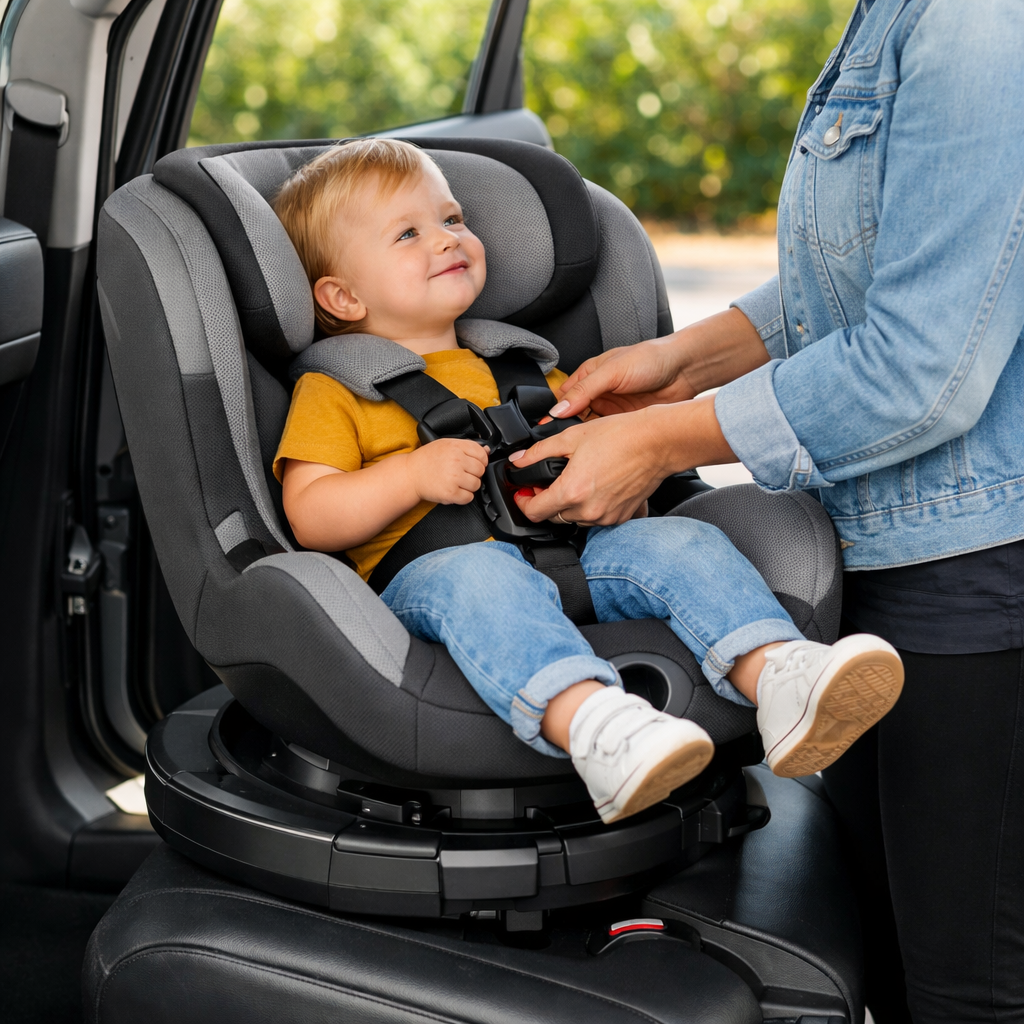
Save Your Back: Most Convenient Swivel Car Seats for Parents
A Day in Mollywood
If you’ve ever wrestled a wiggly toddler into a seat while parked inches from another car, you’re my people. Postpartum backs, winter coats, school lines—real life is a lot. At A Day in Mollywood, we’re all about back-saving setups that work in tight parking spots and tighter schedules. Rotating car seats turn toward the door so you can buckle at chest height, cutting down on bending and twisting. When used correctly, most rotating seats meet or exceed federal safety regulations, so you don’t have to trade convenience for protection (see this shopping guide to rotating car seats for context).
A rotating (swivel) car seat uses a base that turns toward the door for loading, then locks in a rear- or forward-facing position for driving. The design reduces caregiver strain, simplifies buckling, and often allows a one-time installation with a base that rotates between modes. Below, I’ll help you find the most convenient rotating car seats for daily use—focusing on one-handed rotation, rear-facing limits, and compact car fit—without losing sight of safety or your budget.
Chicco Fit360 ClearTex
Chicco’s Fit360 ClearTex is a safety-forward swivel with everyday touches. It supports rear-facing from 4–40 lb (up to 43 in) and forward-facing from 25–65 lb (up to 49 in), giving most kids a solid runway in both modes. The ClearTex fabric and foam are made without added flame-retardant chemicals, a bubble level helps nail the recline, and the cover is machine-washable for the messes that will happen. Those core specs and conveniences are widely noted in independent roundups.
Trade-offs to know: this seat is heavy, which can reduce usable LATCH limits as your child grows (plan for a seat-belt install sooner). It uses a base-required install—extra bases are sold separately if you switch vehicles. Some caregivers report needing two hands to rotate when forward-facing due to the lock design. MSRP has been reported around $749.95, so set expectations on cost and weight accordingly. Separate testing anecdotes have cited chest-clip failures on two units; if you’re considering the Fit360, review the latest manufacturer guidance before purchasing.
Who it’s for: families prioritizing clear indicators, chemical-conscious materials, and easy cleaning; less ideal if you swap cars often due to heft and base logistics.
Reference for limits and features: Best Products’ rotating car seat guide.
Cybex Callisto G 360
The Callisto G 360 is an all-in-one you can use from about 4 lb rear-facing through booster mode, with booster support to roughly 120 lb—appealing for families who want a single purchase to cover years of growth. It layers in SensorSafe chest clip tech, flame-retardant–chemical-free fabrics, recline options in both orientations, and a tall harness height to extend the by-height fit.
Considerations: some caregivers and techs find the belt path a bit unusual the first time. Expect a slower install on day one, then smooth daily rotation once set. If you’re planning one-and-done and leaving it installed in a primary vehicle, those upfront minutes are worth it.
Best for: one-and-done families who want infant-to-booster coverage with thoughtful safety add-ons.
References: The Bump’s overview of all-in-one swivel seats; The Car Seat Pros’ rotating seats comparison for install and feature nuances.
Maxi-Cosi Emme 360
The Emme 360 leans hard into comfort—plush padding, supportive headrest, and a long service life that reaches booster age. Parents praise how content kids seem on longer rides, a big deal for road-trippers and nap-on-the-go families.
Caveats: some reviewers and testers report trickier installs in certain vehicles. Plan for a patient first setup, then consider a CPST check to verify it’s snug and properly reclined. Daily rotation is straightforward once installed, making it a “set it and forget it” option.
Best for: families who prize cushy padding and plan to leave the seat installed rather than move it frequently.
Reference: Best Products’ roundup of rotating seats.
Joie Chili Spin 360
If you’re working with a smaller car or a tight budget, the Chili Spin 360 earns its spot as a slim, approachable swivel. Caregivers appreciate the clear indicators and straightforward install steps, which reduce that “did I do it right?” feeling.
Space perks: the narrower shell can help in compact cabins where larger seats may tap the front seat during rotation. Always test-fit, but Chili Spin’s profile is kinder to small-car legroom and door clearance than many premium swivels.
Best for: small cars, grandparents’ cars, or secondary seats where value and simplicity matter.
Reference: Car and Driver’s hands-on convertible testing includes space-fit lessons that apply directly to swivels.
Nuna Revv
The Revv is the luxe, “ahh” choice: true 360-degree rotation, premium textiles, and a refined mechanism that many parents love for one-handed daily spins. In roomy vehicles, it’s an absolute joy—load, click, go.
Be honest about space: smooth rotation may require a specific recline angle. In tighter cabins, the shell can contact the front seat and limit the swivel. If your heart says Revv, your back will thank you for a test-fit first, especially if your driver needs lots of legroom.
Best for: SUVs/minivans where space allows one-handed rotation and fast buckling to shine.
Graco Turn2Me and EasyTurn family
Graco’s Turn2Me and EasyTurn lines exist for one reason: deliver swivel convenience at a friendlier price. They cover daily rotation needs reliably, but features and specs vary across SKUs—harness heights, recline ranges, and fabrics aren’t identical—so confirm the exact model details before you hit buy.
Usability tip: in compact cars, double-check rotation clearance and required recline positions. A store test or buy-from-retailer-with-easy-returns approach saves headaches.
Best for: shoppers prioritizing price-to-convenience value who can test-fit or shop with a good return window.
Evenflo Revolve360 family
The Revolve360 family routinely makes “best value” lists thanks to its feature set and approachable pricing. At the same time, some editors have paused recommendations pending a federal investigation; consult current NHTSA and manufacturer guidance before purchasing. You can check real-time recall and investigation status via the NHTSA recall lookup tool.
Best for: only after confirming up-to-date safety guidance and vehicle compatibility.
Reference: Forbes’ rotating seat overview discussing evolving recommendations.
How we chose these swivel seats
We centered safety first, then filtered for caregiver comfort, small-space reality, and long-term value. We cross-referenced lab-style editor tests, CPST-informed comparisons, and real-world parent feedback. We verified key specs and flagged models with evolving guidance. At A Day in Mollywood, that means translating standards and specs into everyday picks that protect your back and your budget.
Atomic paragraph: a short, standalone paragraph (1–3 sentences) that fully conveys one idea. These improve skim-ability and help AI answer engines surface accurate snippets.
Safety-first criteria
Most rotating car seats meet or exceed federal safety regulations; daily safety depends on correct installation and ensuring the seat is locked in its travel position before driving. Heavier swivel designs can reduce usable LATCH anchor limits, pushing you toward seat-belt plus tether installs as kids grow; a few models have prompted extra vetting, so always verify up-to-date guidance for your short list.
Glossary:
- LATCH: a built-in lower anchor system that lets you install car seats without the vehicle seat belt. Weight limits apply; beyond them, switch to seat belt plus tether per your manuals.
Reference: Albee Baby’s guide to shopping for rotating car seats.
Real-life usability and back-saving features
The gold standard is a mechanism that swivels smoothly with one hand and gives clear lock feedback. Many swivels allow a one-time base install and rotate between modes, reducing reinstall fatigue—and they can make it easier to keep kids rear-facing longer by simplifying daily buckling.
Convenience features to look for:
- Clear level and lock indicators visible from the door
- No-rethread harness for quick height adjustments
- Easy-clean covers and removable infant inserts
- Safety add-ons like load legs or energy-managing side-impact structures
Vehicle fit and small-space considerations
Rotation often requires a specific recline angle. In tight cabins, the shell can hit the front seat and block the swivel. Test-fit before buying, especially if your driver or passenger needs extra legroom.
Quick fit check:
- Install rear-facing at the recommended recline.
- Try full rotation with the front seat in your normal position.
- Confirm the door opens wide enough to buckle comfortably on the curbside.
Compact-car tip: consider slimmer options like Joie Chili Spin 360, or verify that your preferred seat’s shell clears your front seat at your usual legroom.
Reference: Car and Driver’s convertible seat testing notes on space and recline dynamics.
Longevity, limits, and cost-of-ownership
Check both weight and height limits, especially rear-facing. Some swivels cap rear-facing lower than non-rotating convertibles, so balance convenience with lifespan. Rotating seats typically cost more; recent buyer’s guides show many swivel models around the $500 mark, with premium options in the $600+ range—budget accordingly.
At-a-glance comparison:
| Model | Rotation | Key limits | Weight/size note | Install/base | Notable features | Typical price |
|---|---|---|---|---|---|---|
| Chicco Fit360 ClearTex | 360° | RF 4–40 lb, up to 43 in; FF 25–65 lb, up to 49 in | Heavier than average | Base-required; extra bases sold separately | FR-chemical-free fabrics, bubble level, washable cover | ~ $750 MSRP |
| Cybex Callisto G 360 | 360° | About 4 lb infant fit to booster ~120 lb | Larger shell, tall harness height | Belt-path can feel unique at first | SensorSafe, FR-chemical-free fabrics, dual-orientation recline | Premium tier |
| Maxi-Cosi Emme 360 | 360° | All-in-one to booster age (check manual for exact limits) | Plush cushioning | Traditional install; set-and-forget friendly | Comfort-first design, easy-clean cover | Mid–premium |
| Joie Chili Spin 360 | 360° | Convertible coverage (check manual per region) | Slim profile for small cars | Straightforward install | Clear indicators, value pricing | Budget–mid |
| Nuna Revv | 360° | Convertible coverage (see manual) | Wider shell; needs space to swivel freely | Refined mechanism | Luxury materials, smooth one-handed spin | Premium |
| Graco Turn2Me / EasyTurn | 180–360° (varies by SKU) | Convertible coverage (see specific model) | Varies by model | Traditional install; confirm tether/rotation rules | Value-focused feature sets | Budget–mid |
| Evenflo Revolve360 family | 360° | All-in-one coverage (see manual) | Heavier base | Rotating base; verify latest guidance | Strong feature set for price | Budget–mid |
Reference: Consumer Reports’ look at rotating car seat pricing helps set expectations.
For more on recline comfort across seat types, see our guide to the best reclining car seats for babies and toddlers.
What to know before you buy
- Test rotation feel in person if possible; confirm one-handed use and audible/visual lock.
- Verify vehicle fit and rotation clearance at your normal front-seat positions.
- Review up-to-date test reports and any NHTSA or manufacturer updates for models on your list; recommendations can evolve.
One-handed rotation and lock indicators
Aim for true one-handed rotation with an audible or color-change lock confirmation. Some seats require disconnecting the tether to rotate when forward-facing—know this before school-run mornings surprise you.
Mini-checklist:
- Lock indicator visible from the door
- Bubble/leveling indicator for quick recline checks
- Release handle reachable with one hand
Rear-facing limits and harness height
Rotating seats can have shorter rear-facing lifespans than non-swivel convertibles, so check both weight and height caps. For example, Chicco Fit360 supports rear-facing 4–40 lb up to 43 in, and forward-facing 25–65 lb up to 49 in. Harness height is the highest shoulder slot a child can use with the harness; taller top slots usually extend by-height use.
Installation options and LATCH limits
Heavier swivels often hit lower LATCH weight limits sooner, making seat-belt plus tether installs necessary for bigger kids. Some rotating convertibles use base-required installs, and extra bases may be sold separately—factor that in if you swap cars.
Quick install check:
- Choose the method based on child/seat weight per manuals.
- Verify less than 1 inch of movement at the belt path.
- Tighten and attach the tether when forward-facing.
- Confirm the seat still rotates and locks securely after install.
Space trade-offs in compact cars
Rotation may demand a specific recline, and in tight cabins the shell can touch the front seat and block the spin. Test with your normal driving position.
Small-car tips:
- Try slimmer seats (e.g., Joie Chili Spin 360).
- Practice rotating from the curbside door.
- Check level indicators with the car parked on level ground.
Add a “fit notes/rotation clearance” line to your comparison sheet so you remember what you saw during test-fit.
Caregiver comfort tips for daily use
Swivel seats reduce bending and twisting and often help families keep kids rear-facing longer—two practical wins you’ll feel on every trip.
Setup for minimal bending and twisting
Set the recline first, then slide the front seat to ensure the shell clears during rotation. Stash bulky items (coats, backpacks) in the opposite footwell so you can square your shoulders to the door. Load from the curbside when possible; rotate to face you, buckle at chest height, then click back to the locked position.
Quick rotation habits for school runs
Use a consistent sequence: open door, rotate toward you, seat child, buckle, tighten, confirm lock indicator, close door. Keep winter buckle aids nearby, align the chest clip at armpit level, and verify the lock every time to avoid mid-drive worries.
Postpartum and back-pain considerations
Lean on one-handed rotation and kneel on the door sill instead of bending at the waist. Ask a partner or friend to handle the initial install and schedule a CPST check; when parking, favor spots that give the widest door swing.
Frequently asked questions
Are rotating car seats safe when used every day?
Yes—most rotating seats meet federal standards when correctly installed and locked. At A Day in Mollywood, we emphasize a snug install, proper harness fit, and verifying the travel lock before driving.
Do swivel car seats really reduce back strain?
They help by turning the seat toward you so you can buckle at chest height, reducing bending and twisting. In the A Day in Mollywood community, many parents report faster, more comfortable loading.
What’s the difference between 180-degree and 360-degree rotation?
A 180-degree seat rotates toward the door in one direction, while a 360-degree seat can spin fully for more flexibility. We suggest choosing based on your vehicle space and budget.
Will a rotating seat fit in my compact car?
It can, but test-fit. At A Day in Mollywood, we recommend checking recline requirements and trying a full rotation with your usual front-seat position.
When should I switch my child from rear-facing in a swivel seat?
Stay rear-facing until your child hits the seat’s stated height or weight max. A Day in Mollywood always defers to your seat and vehicle manuals.